Contents
- Baby I
- Prosecution opening statement
- Defence Opening Statement
- Defence Closing Speech
- Agreed Facts
- Recorded Events and Messages/Facebook
- NEW: Lucy Letby in the Witness Box
- Direct Examination
- Cross-Examination
- Witness Statements Agreed
- Family - Mother
- Consultant neonatologist at Liverpool Women's Hospital
- Unnamed nurse (1)
- Nurse Shelley Tomlins
- Nurse Joanne Williams
- Dr David Harkness
- Doctor - unnamed
- Nurse Christopher Booth
- Nurse Melanie Taylor
- Nurse Valerie Thomas
- Witness Evidence
- Unnamed nurse (2)
- Nurse Bernadette Butterworth
- GP Lucy Beebe
- Nurse Ashleigh Hudson
- Dr Matthew Neame
- Dr Rachel Chang
- Dr John Gibbs
- Medical Experts Evidence
- Professor Arthur Owens
- Dr Dewi Evans
- Dr Sandie Bohin
- Dr Andreas Marnerides
- Police interviews summary
- NEW: Thirlwall Inquiry Evidence
Main Page
Baby I
Count 12: Murder of Baby I on 23 October 2015, with 3 prior attempts (Air via NG tube/air embolism)The prosecution say Lucy Letby attempted to kill Child I on September 30, on October 12, on October 14 and on October 22, the last date being Child I's death.
Dr Shoo Lee's International Panel Summary Conclusions
BABY 9 SUMMARY [Baby I]
Baby 9 was a 27 week, 970 gm birth weight, female infant, with intrauterine growth restriction (IUGR),
who was born after premature rupture of membranes at Liverpool Women’s Hospital. She was treated
for mild respiratory distress syndrome (RDS) with respiratory support and antibiotics for sepsis
beginning on day 1 of life, and with intravenous and enteral feeds by oral tubing. She developed
bradycardias, respiratory distress and an elevated white count, leading to her first of 5 transfers to 4
hospitals on day 12 of life. She developed chronic lung disease (CLD), abdominal distension and
recurrent episodes of apnoea, desaturation and bradycardia requiring resuscitation and ventilation. She
had viscous, gelatinous secretions from her airway and mouth that were associated with frequent
blockages of her endotracheal tube (ETT), and “sticky stools”. A registrar stated that “It’s not unusual
for babies on breathing support to get secretions but it was a bit unusual for them to be so stubborn at
being removed.” Testing for cystic fibrosis was sent. She had an episode of lung collapse. At 2½ months,
she had an episode of severe apnoea, bradycardia, desaturation and heart block and deceased.
CONVICTION
It was alleged that air was ‘injected’ into Baby 9’s stomach via a naso-gastric tube, leading to recurrent
episodes of abdominal distension, “splinting” of the diaphragm, and respiratory arrest. On 13/10/15, it
was alleged that the apnoea alarm was deliberately turned off, resulting in delay in response to a
collapse. On 15/10/15, it was alleged that air was injected into her intravenous tubing, causing air
embolism and death.
PANEL OPINION
Baby 9 was a very preterm, IUGR infant with respiratory distress syndrome and chronic lung disease.
Stenotrophomonas maltophilia, was detected in surveillance cultures from her ETT. S. maltophilia is a
multiresistant opportunistic pathogen that can colonize the airway in “biofilms” that are resistant to
antibiotics and generally impossible to clear in patients with chronic lung disease. The thick secretions
can block ETTs and interfere with ventilation in the small airways of these vulnerable infants, which
together with other factors like chronic lung disease, lead to recurrent episodes of apnoea, desaturation,
bradycardia, respiratory failure, and collapse. S maltophilia colonisation would have further compromised
her ventilatory capacity. The initial abdominal distension was likely due to sepsis causing ileus or to
lactose intolerance, as there was a family history and stools were positive for reducing substances. The
repeated abdominal x-rays showing intestinal gaseous distension were all taken after resuscitation, and
air was likely introduced by bagging. A nurse explained that the reason the apnoea alarm did not sound
was because “The apnoea alarm goes off if there is a 20 second period of no breaths, but because she
was gasping and it was less than 20 seconds, it hadn’t gone off.” There is no evidence that air embolism
was involved. Baby I was not treated for S. maltophilia.
CONCLUSIONS
1. Baby 9 died of respiratory complications caused by respiratory distress syndrome and chronic lung
disease, complicated by S. maltophilia colonization.
2. The doctors failed to respond to surveillance warnings about S. maltophilia, did not recognize the
diagnosis, and did not treat her with the appropriate antibiotics. This was a likely preventable death.
3. There is no evidence of air causing splinting of the diaphragm or of air embolism.
4. There is evidence that the apnoea alarm was not turned off.
Prosecution opening statement
BackgroundChild I was born in Liverpool Women's Hospital, premature, on August 2015. The prosecution say Letby made four attempts to kill Child I, succeeding on the fourth attempt.Child I was born, weighing 2lbs 2oz, but in good condition. She was intubated and ventilated, then supported by CPAP, and fed through a nasogastric tube. In the first few weeks, she had "a few problems", but "all were resolved". Child I, by late September, had diminshed clinical concerns, and no breathing problems.
Incidents
For what the prosecution say was the first attempt, Letby was on a 'long day' shift (8am-8pm) on September 30. She was Child I's designated nurse in room three.
According to Child I's mum, Letby expressed concern about the child and indicated Child I would be reviewed by a doctor. When she made a nursing note, Letby "reversed the concern", and said it was the mum who had raised a concern about the abdomen, saying it was "more distended to yesterday" and Child I was "quiet...not on monitor but nil increased work of breathing”.
A review took place at 3pm - over an hour after these notes. Child I appeared mottled in colour with a distended abdomen and prominent veins. A feeding chart showed 35mls was given to Child I when asleep, but Letby had recorded Child I as "handling well and waking for feeds".
At 4pm, Letby recorded feeding Child I 35mls of expressed breast milk via the NGT.
An emergency crash call was called at 4.30pm as Child I had vomited, desaturated, her heart-rate had dropped and she was struggling to breathe. Her airway had to be cleared and she was given breathing support, and Child I was transferred to room 1.
An x-ray at 5.39pm revealed a "massive amount of gas in her stomach and bowels" and her lungs appeared "squashed" and "of small volume". The prosecution say air had been injected into the NGT to give a 'splinted diaphragm'. A doctor recorded Child I had suffered a 'respiratory arrest' at 4.30pm, struggling to breathe, she was pale and distressed, and the abdomen was 'distended and hard'. The NGT was aspirated and produced 'air+++ and 2mls of milk', after which Child I improved.
The prosecution says this is at odds with the 35mls of milk Child I was fed with at 4pm
The prosecution say "removed from the orbit of Lucy Letby," Child I's condition improved.
Child I continued to improve and was in nursery room 2 on the night of October 12 by a designated nurse different to Letby. Letby was looking after a baby in room 1. Child I was being bottle fed every 4 hours, and at 1.30am took a 55ml bottle of breast milk.
At 3am, the designated nurse left the nursery temporarily and said she asked either Letby or another colleague to listen out for Child I. The designated nurse, records show, helped another colleague with something in room 1. The prosecution say it is more likely the nurse would have asked Letby to look out for Child I. Upon the designated nurse's return to room 2, Letby was "standing in the doorway of the room" and Letby said Child I "looked pale". The designated nurse switched on the light and saw Child I was "at the point of death". She later recalled the child was breathing about 'once every 20 seconds'.
The prosecution says the jury should consider how Lucy Letby could see a child was looking pale when the room was darkened at 3.20am, with minimal lighting.The prosecution say the nurse's recollection is right, as Lucy Letby made a note at the end of her shift at 8.10am: '[Child I] noted to be pale in cot by myself at 03:20hrs … apnoea alarm in situ and had not sounded. On examination [Child I] centrally white, minimal shallow breaths followed by gasping observed.'
The registrar was called to the unit at 3.23am. On arrival, he saw nurses giving Child I full CPR. The notes suggest he had to reposition the ETT. A consultant doctor administered adrenaline, intubated and ventilated Child I.
An X-ray showed gross gaseous distention throughout the bowel and signs of chronic lung disease of prematurity (CLD).
Child I, the prosecution say, had the same problem that she had when Letby had fed her on September 30. The medical team felt that the abdominal distention had affected her ability to expand the chest and in turn caused desaturation.
Both nursing and medical staff commented on a bruised like discolouration to the right of the sternum. They assumed this was the result of chest compressions.
The category of nursing care was raised a level. "Ironically," the prosecution say, Letby was made the designated nurse, as she was more qualified.
Medical notes showed the ETT had been "displaced" and, at 4.25am, the NGT was "curled in the oesophagus", which the prosecution say would have prevented release of the pressure created by excess air in the stomach.
For what the proseution say was the third attempt, Letby had responsibility for Child I on the night of October 13.
Both Letby and a doctor recorded Child I had increasing abdominal distension, discolouration to the right and sensitivity to touch between 5am and 5.55am. The X-ray taken at 6.05ams showed widespread gaseous distention sufficient to splint the diaphragm. This prevented her from breathing properly. Child I had the same problem as before.
At 7am, CPR was required as Child I had a 'significant desaturation'.
The doctor recorded, at 7.10am: "desaturating again despite good AE (air entry), chest wall movement and negative cold light (i.e. no pneumothorax) … at about 7.45am HR (heart rate) below 60. CPR initiated… [various boluses given] … capnography positive. Chest wall movement and equal AE noted…”
The prosecution says Child I was "brought back from the brink of death right at the end of the shift, at 7.58am".
Letby noted at 8.43am: "At 05:00hrs abdomen noted to be more distened (sic) and firmer in appearance with area of discolouration spreading on right hand side. Veins more prominent … gradually requiring 100% oxygen. Blood gases poor as charted …. nil obtained from NG tube throughout. Continued to decline. Re intubated at approx. 07:00 – initially responded well … resuscitation commenced as documented in medical notes. Night and day staff members present”
That was, the prosecution say, the third attempt at murder.
Child I was transferred to Arrowe Park Hospital. She had an episode of bradycardia and desaturations after which she quickly stabilised. The prosecution say once again, a child had recovered quickly out of the care of Letby. Child I was transferred back to the Countess of Chester Hospital on October 17. On the night of October 22, Letby was on a night shift, with a different nurse being the designated nurse for Child I. Between 8pm and Child I's collapse, the only entry Letby made in any child's records was those in her charge in room 3. The prosecution say it was, from her records, a slow night for her.
Just before midnight, Child I became unsettled. Letby and another nurse attended to her but Child I collapsed and required CPR.
The on-call registrar noted Child I had a mottled blue appearance of the trunk and peripheries.
After 5 minutes of CPR, Child I's saturation rate returned to 100% and she recovered to the point of 'rooting' - ie a sign of hunger, and was 'fighting the ventilator' - ie trying to breathe independently. The ET tube was removed at 12.45am.
At 1.06am a nurse, having left the nursery temporarily, responded to Child I's alarm and saw Lucy Letby at the incubator. Child I was very distressed and wanted to intervene, but Letby assured her that they would be able to settle the baby.
"Don't worry - we will sort it out," Mr Johnson tells the jury. Child I then collapsed.
The on-call doctor arrived and resuscitation attempts were made. Purple and white mottling were noted on Child I's skin.
All resuscitative efforts were unsuccessful and treatment was withdrawn at 2.10am, and Child I was pronounced dead at 2.30am.
Baby bath comment
In the immediate aftermath, Child I's parents were taken to a private room. As the mum bathed her recently deceased child, Lucy Letby came into the room and, in the words of the mum, "was smiling and kept going on about how she was present at [Child I']s first bath and how much [Child I] had loved it.”
Medical experts
The cause of death was given by the coroner as Hypoxic ischaemic damage of brain and chronic lung due to prematurity and 1b. Extreme prematurity. All loops of bowel showed significantly dilated lumen due to increased air content – in layman’s terms they were expanded like a partially inflated balloon. There was no sign of NEC (bowel necrosis) or any other bowel problem.
The prosecution say there were signs of "earlier hypoxic ischaemic damage – in other words, the earlier attempts to kill her had caused brain damage resulting from a shortage of oxygen." Medical expert Dr Dewi Evans said he believed the apnoea monitor might have been switched off on October 13 for child I, and the deliberate administering of a large bolus of air into Child I's stomach via her NG tube on October 22/23.
Police interviews
In police interview, Letby said she could not remember the circumstances of September 30, and had taken over the care of Child I after the child had an "episode". She said she had no recollection of the events surroudning Child I's death, and said the child had been returned from Arrowe Park Hospital too quickly.
Sympathy card
In June 2019, she was asked about a sympathy card she had sent to the child's parents. She said it was not normal to do so - and this was the only time she had done so. She accepted having an image of that card on her phone.
She was asked about the October 13 incident and challenged the nurse's account, adding: "Maybe I spotted something that [the nurse] wasn't able to spot", as she was "more experienced".
She was asked why she had searched for the parents' details on Facebook. She said she did not recall doing it.
The prosecution say Child I "was doing well by the time Lucy Letby got her hands on her.
"What happened...followed the pattern of what happened to others before and what has yet to happen to others.
"All of a sudden out of nowhere came vomiting, breathing problems and critical desaturations.
"It was persistent, it was calculated, and it was cold-blooded."
Defence opening statement
For Child I, the defence say her death was a result of "ongoing clinical problems caused by her extreme prematurity".The air embolus is "not accepted" as a cause by the defence.The defence say CPAP treatment may have caused 'CPAP belly' in Child I, causing a distended abdomen.
Defence Closing Speech
Mr Myers refers to the case of Child I, which he says has a lot of detail to it. He says Child I was very small and "fragile" and "capable of deteriorating from almost nothing". He says this was evidence heard from her time in Liverpool. He says nurses would talk of Child I 'having a big tummy', and Dr Bohin agreed there were multiple occasions noted of a distended abdomen. He says Child I regularly presented as "mottled".
Mr Myers refers to an event of 'abdominal distention' on August 23, which experts had agreed was 'consistent of harm', but is not on the sequence of events and Letby was not on duty. He says there is an 18-hour period from September 5-6 where Child I deteriorated from being a well baby, to the point she was transferred to Arrowe Park Hospital. Mr Myers says it shows how quick Child I could deteriorate, and "she was not doing well".
He says, for the first event [that Letby is charged with], the cause of the collapse on September 30 was said by Dr Evans and Dr Bohin to be air down the NG Tube. Mr Myers says this is the event with Letby's note which the prosecution took issue, that there was 'no doctor review', and she was 'lying about a fictional review at 1500'. He says the agreed evidence by Child I's mother said she was changing Child I's nappy when a nurse she later found to be Letby said Child I's stomach appeared swollen. In a second statement by Child I's mother, she said the first time she saw Letby was 3pm, and remembered Letby 'I'll go and get the doctor to come and check her.' The mother said she agreed, and a female doctor went and checked Child I.
Mr Myers says for the 4pm event, Letby calls for the doctors "in good time", and 'that is all'. He says for 7.30pm, nurse Bernadette Butterworth had said Child I's air in the tummy increased from Neopuffing, and that can push the diaphragm up. He says breathing support can cause abdominal distention, and that can be applied from as little as Neopuffing.
He says for the second event of Child I, this event is the 'what could Lucy Letby see or not see?' He says one of the issues in this case, staffing experience levels are a factor. He says Letby had said nurse Ashleigh Hudson was 'quite inexperienced'. He says Child I was on antibiotics up to a few hours before the collapse, not 48 hours as the prosecution had said. He says as there are no heart rate or respiration observations being recorded, it could not be said how stable Child I was before the collapse.
The trial is resuming following a short break.
Mr Myers says Ashleigh Hudson had been away from nursery room 2 'for about 15 minutes', and when she comes back, no-one is in the nursery. He says Letby is in the doorway of 'a small room'. He says there was 'certainly enough light' for nurse Hudson to feed Child I. He says she 'embarked on a lighting reconstruction' five years later, with the lighting level 'made for the purpose of this investigation'. He says the light would be 'so dark' to 'put the milk in the bottle'. He says Nicola Dennison said the babies were arranged so you can look at them. He says the defence case is that is at odds with what Ashleigh Hudson had given.
Mr Myers says Letby had, in cross-examination, said she had more experience what she was 'looking for - at.' He says this was the fifth day of cross-exmanation, when Letby was increasingly tired and finding it difficult to concentrate. He says there is no meaningful difference between the words 'for' and 'at'. He adds room 2 has a window between the corridor and the nursery. He says it is "unrealistic" to say the room was "impossible" to look in and see babies.
Mr Myers asks what evidence there is for air embolus, as there was no NG Tube. He says Dr Bohin relied upon discolouration of sternum. He says extensive CPR took place on Child I after this collapse, and there was bruising as a result. Mr Myers says there is no clear basis as to what have happened, unless someone had used a 'mobile NG Tube in the most improbable of circumstances'.
Mr Myers says abdominal distention is a running theme for Child I, and while that does not mean harm was not done, it does not alone form the basis of an intent to kill. He says: "we keep having incidents where Letby isn't doing anything she shouldn't do". He says the defence are critical of the theory of air down the NG Tube. He says it is a theory that has been done to support the prosecution. He asks how much air is needed, and how long it takes.
He says for the final event, there are two signficant desaturations, one just before midnight, seen by Ashleigh Hudson, who is not sure why. He says there is a similar event at 1.06am the following morning, on October 23, when Child I does not recover and dies at 2.30am. He says the difference with the latter is Lucy Letby is there. He asks what the difference is between the two events. He says Child I was a very poorly baby before this night, and Child I "would have been under terrible stress".
Mr Myers says Dr John Gibbs noted: 'Poor response to second resuscitation might have been to heart being compromised by previous...collapses'. He says the evidence was the abdomen became distended in response to the first collapse, as Ashleigh Hudson had noted the 'abdo soft' at 23.57pm. A radiograph after the collapse showed a distended abdomen. He says Dr Evans and Dr Bohin 'made a lot' of Child I's crying at the time. He says the experts had worked this symptom in during the course of their evidence as a sign of air embolus. He asks whether there was supposed to be an air embolus at 11.57pm, at 1.06am, or both.
Mr Myers asks about the allegation Letby amended a time on a document: "So what?" He asks about the relevance of it. He asks what is meant to establish that it was done deliberately, rather than a mistake.
He refers to the sympathy card Letby had sent for the parents of Child I, a photo of which was taken while she was at work. He says another photo was taken of a card she had sent to some friends. He says it had been heard this was something she did. He said the sympathy card was sent as she could not go to the funeral of Child I. Mr Myers says evidence had been heard by Lucy Beebe saying Letby was 'crying' after the death of Child I, saying: 'Why is it always me?' He says that was a genuine response by her.
Agreed Facts
Recorded Events and Messages/Facebook
Intelligence analyst Claire Hocknell is recalled to talk the jury through the sequence of events for Child I.
The first event - 30th September
This sequence of events will focus on 'the first event' for Child I, which happened on September 30, 2015.
7th August-13th September 2015
8.47pmChild I was born at a gestational age of 27 weeks at 8.47pm on August
7, 2015. She was transferred to the Countess of Chester Hospital on August 18, being cared
from 8.30pm. She was transferred back to Liverpool on September 6, before going back to
Chester on September 13, at 11pm.
21st-29th September 2015
On September 21, Letby was working a long day shift.
During that day, Child G suffered a significant deterioration at 10.15am. Letby worked a
number of night shifts on September 23, 24, 25 and 26. during this time, Child I suffered
two significant deteriorations. Letby then had a few days off work before returning on
September 30.
A note by the day shift nurse, Shelley Tomlins, gave a brief update on Child I for September 29, recording the mother had been present for 'cares', and regular 35ml feeds of expressed breast milk and fortifier were administered every three hours. A subsequent note recorded Child I 'remains pale but managing to complete bottles (slow to feed as windy).'
The overnight shift nurse, Jennifer Jones-Key, said Child I continued to be fed regularly, with her tummy 'full but soft', and the father present for cares.
30th September 2015
The court is now resuming after a short break. The sequence of events
is now going on to the day shift of September 30, 2015, which has Lucy Letby as a designated
nurse.
Letby was looking after three babies in room three that day, including Child I. Child G was in room 2, with two other babies. Two babies were in room 1.
10am-4pm: Consultant paediatrician Dr Elizabeth Newby records, as part of an inspection for Child I as part of a 'grand round', for feeds to continue. Feeds are continued for Child I during the day at 10am, 1pm and 4pm, of 35mls expressed breast milk and fortifier. The 10am feed is by bottle, the 1pm and 4pm are via nasogastric tube with Child I being recorded as asleep for the latter two feeds.
12.15pm: On September 30, at 12.15pm, Child H is transferred back to the Countess of Chester Hospital.
1.36pm: At 1.36pm, Letby records Child I's temperature in the hotcot.
She adds, after a note on the 3x8 feeds: "'Abdomen appears full and slightly distended. Soft
to touch, [Child I] straining++. Bowels have been opened. Mum feels it is more distended to
yesterday and that [Child I] is quiet. Appears generally pale. Not on monitor...[will
continue to monitor situation]"
1.48pm: "Mummy visiting, carrying out feeds and cares".
1pm: A note for the feed at 1pm is read out to the court - 'EBM+fortifier, NGT, vomit aspirated 5ml, ph5'. It is signed by Letby.
3pm: Letby records, for 3pm: 'Reviewed by Drs as [Child I] appeared mottled in colour with distended abdomen and more prominent veins. Advised to continue. Temperature within normal range with hot cot at 38 degrees. Full monitoring recommenced. within normal range.' Observations are commenced more regularly for Child I, the court hears.
4pm: A 35ml feed at 4pm for Child I has an aspirate of 3ml, with Child I 'asleep'. It is signed by Letby's initials. Letby notes: 'did not wake for feed at 1600 therefore NG Tube feed given'.
4.30pm: Child I then suffers a deterioration at 4.30pm. 4.30pm on the feed chart records, for Child I, 'large vomit and apnoea - nil by mouth'. It is not signed by anyone.
Letby notes: 'At 1630 [Child I] had a large vomit from mouth and nose++ suction given. Became apnoeic with bradycardia and desaturation (30s). Help summoned and IPPV given for approx 3min in 100% oxygen to recover. Drs were crash called. Transferred to nursery 1...' A doctor [who cannot be named] records he is crash called. He notes 'Chest clear... Abdomen distended, active bowel sounds all zones'
5.23pm: Letby's mentor replies to a message Letby had sent earlier, expressing birthday wishes, at 5.23pm: 'Ah thank you so much. You ok? x'
5.39pm: An x-ray is taken of Child I at 5.39pm, with the radiologist recording: 'There is splinting of the diaphragm due to bowel distension...there is moderately severe bowel distention which is thought to involve both large and small bowel. The appearances are suspicious of NEC...'
5.45-6pm: Medication of glucose and sodium chloride is co-signed by Letby at 5.45pm and 6pm. A CRP blood reading for Child I is 'less than 1'.
7.30pm: Child I suffered another deterioration at 7.30pm. Letby's notes, written in retrospect at 8.26pm, record: 'At 1930 [Child I] became apnoeic - abdomen distended++ and firm. Bradycardia and desaturation followed, SHO in attendance and registrar called... Nil by mouth. NG tube on free drainage. Cannula inserted but tissued during saline bolus (5mls given). Colour appears pale but improved from earlier in shift. Abdomen appears full and distended. Veins more prominent. Not further vomits. Responsive but quiet on handling.' For the family communications: 'Mummy present when reviewed by Drs. Had left unit when [Child I] had large vomit and transferred to nursery 1. [Mother] up to date with current plan...' Nurse Bernadette Butterworth, who took over care of Child I for the night shift, records: 'During handover [Child I] abdo became more distended and hard she had become apnoeic and bradycardic and sats had dropped. IPPV given and despite a good seal with Neopuff there was still no chest movement...'
8pm: The doctor records 'ticks' for temperature instability and apnoea for Child I at 8pm.
8.26pm: Letby's final note from 8.26pm: '[Child I] is now very pale and quiet.'
Letby responds to her mentor: 'Yes thank you. Hope you are enjoying your celebrations. X'
8.30pm: Bernadette Butterworth inputs an incident, written at 8.30am [on 1st October] for 8.30pm the previous night, about administering an antibiotic infusion over 10 minutes instead of 30 minutes. 'Although correct dose was given it was delivered at a faster rate. When aware of mistake, infusion was adjusted. Reg and shift leader informed'.
The court is shown a series of text messages sent to and from Letby's phone from that night.
The text messages related to one of Letby's female colleagues having an argument with another nurse who 'snapped at her'. Letby messages Jennifer Jones-Key to say: "I am a bit up and down. Have not had nice shifts and not been feeling supported by some people." Letby messages another colleague: "Let's run away!!!" and the subject turns to moving away to New Zealand, which one of the nurses is planning to do. Letby said she could not do so as it would mean leaving her parents behind, they would be "completely devastated". She said she had come to Chester for university and did not go back to Hereford, and added: "I feel guilty being so far away often", but it was what she wanted.
10.09pm: Letby messages colleague Alison Ventress at 10.09pm: "Families are tough aren't they!" followed by two sad face emojis. Alison Ventress replied: "Some more than others!..."
Letby messages Jennifer Jones-Key to say she had been originally taken off the September 30 shift for working the previous Wednesday night, but was later put back on the shift.
The sequence of events relays medications which were given to Child I throughout the night shift, along with regular observations.
1st October 2015
For the day shift on October 1, Ashleigh Hudson was the designated
nurse, who continues to record observations for Child I.
8.44am: Bernadette Butterworth recorded Child I, at 8.44am, was 'handling much better without desats/Bradys'. Was initially very pale colour has improved, abdo remains distended and firm but less distended than at beginning of shift'. The parents were made aware of the plan of care. A doctor, during the ward round, said it was considered to restart feeds for Child I. The parents were concerned Child I may be lactose intolerant, and that had possibly led to abdominal distention.
Letby messages her mother on October 1 to say she has arranged her shifts so she will be off for Christmas, and will be visiting her parents at that time. The mother replies: "That's fab, I could cry"
Afternoon: (From Chester Standard Article) On the afternoon of October 1, Letby messaged a colleague: " was found gasping in cot, full resus and vented. Don’t know why. Wasn’t nice."
1.36pm: Ashleigh Hudson records, at 1.36pm: [Child I] appears pale but pink and well perfused...' followed by a number of medical notes.
7.48pm: The sequence of events goes to the end of October 1, with Ashleigh Hudson recording at 7.48pm: Review by Paeds SHO...abdomen is softer and less distended, ? start cautiously feeding...' Both parents were updated on the plan of care.
5th October 2023 1.16am: Letby searches for the mother of Child I on Facebook at 1.16am on October 5.
On November 5, 2015, Letby searches for the mother of twins Child E and Child F at 11.41pm, then searched for the mother of Child G at 11.44pm and, in the same minute, a search for the mother of Child I. Letby also searched for the mother of Child I at 11pm on May 29, 2016.
Cross-examination
Benjamin Myers KC, for Letby's defence, is asking Claire Hocknell
questions. He asks about the feeding chart in connection with nursing notes by Lucy Letby at
1.36pm on September 30, with addendum at 1.48pm. The nursing note was written at 1.36pm,
covering 8am-1.36pm, and the family communication is timed at 1.48pm 'mummy visiting,
carrying out feeds and cares'. Mr Myers says the feeding chart for 8am-1.48pm shows one
event of mother coming for feed that morning. He says the family communication isn't timed,
and can refer to the period of 8am-1.48pm, not the time the note was written at 1.48pm.
Mr Myers refers to hourly observation charts which on occasions are not signed. He refers to two which happened in the case of Child C, where there was an hour which was not signed. The nurses who signed for each hour either side of that are not Lucy Letby, but signed by her colleagues.
Observation charts which are not signed by initials are also shown for Child I, with three in a row not initialled.
Kate Tyndall, intelligence analyst, has now returned to talk the jury through neonatal reviews for Child I.
14th October 2015
The following is from The Chester Standard article dated 1st February 2023:
In WhatsApp messages read to the court, Letby asked a colleague on the afternoon of October
14 if Child I was staying on the unit.
She added: "I'd like to keep her please."
Her colleague, who cannot be identified for legal reasons, replied: "Yes. Staying for now. OK re keeping."
An hour later the colleague messaged: "I've had to reallocate. Sorry."
Letby said: "Has something happened?"
The colleague replied: "No. Was just asked to reallocate so no one has her for more than 1 night at a time. Or 1 shift. Not just night." Letby responded: "Yeah that's understandable."
The fourth event - late October
17th October 2015
Claire Hocknell, intelligence analyst for Cheshire Police, has
returned to talk the court through the sequence of events for Child I, focusing on the
'fourth event' in late October 2015. The sequence continues from Child I returning to the
Countess of Chester Hospital at October 17, with charts and observations shown from October
22, after Letby had been off work.
22nd October 2015
3.04am: Nurse Ashleigh Hudson records, for October 22 at 3.04am, that Child I
was 'pink and well perfused', with saturation levels above 96%, abdomen 'soft and
non-distended'. Child I was 'unsettled at start of shift and rooting, settled with dummy.
Settled and sleeping at present'.
8am: Nurse Caroline Oakley recorded, for 8am on October 22, Child I's observations were satisfactory. Further observations by a colleague said Child I was 'pink, alert, active handling well'.
At the end of the day, Child I was noted to be very hungry. Hourly observations, the prosecution say, were carried through the day and were "unremarkable". Letby begins her night shift that evening. A slide is shown to the court showing Child I was in room 1 with one other baby. Ashleigh Hudson was the designated nurse for both babies. Letby was the designated nurse for a baby in room 2 and one in room 3. Another baby in room 3 was Child G. Two babies were in transitional care, and there was another baby whom the prosecution have been unable to confirm their location for that night.
7.45pm: Ashleigh Hudson records Child I, at the start of her shift at 7.45pm on October 22, was 'unsettled and rooting at start of shift, settled with dummy and containment holding'.
Letby messages a colleague to say that night had 'only 8 babies' in the unit, and there is a discussion over transporting a baby to Stoke. She adds: "I think I need to see greys anatomy !!!" Later in the conversation, Letby messages to say Child I "had abdo scan that was fine".
Letby messages colleague Jennifer Jones-Key, who had enquired "How's work". Letby replies that one of the babies she is looking after that night is being transported out that night. The prosecution say that would then leave her with one designated baby that night.
10.57pm: Ashleigh Hudson records at 10.57pm, 'long line removed due to constant occlusions. Neonatal nurse Lucy Letby unable to flush...' The long line was removed and the TPN [nutrition bag] was moved to a peripheral line. Child I was observed to 'tolerate this very well'. 'Sucrose offered, but happy with dummy'. Child I was 'pink and well perfused'.
11pm: The jury is returning after a 10-minute break, and the trial is now resuming. Claire Hocknell is continuing to talk through the sequence of events, from 11pm on October 22, 2015. An observation chart shows three-hourly observations are made for Child I through the day (e.g. 11am, 2pm, 5pm, 8pm), but no record is made at 11pm.
11.57pm: Nurse Ashleigh Hudson records a retrospective note at 11.57pm that
Child I was "very unsettled...due to hunger as rooting. Dummy offered and containment holding
to no effect."
"After repositioning, [Child I] became quiet, apnoeic and dusky in appearance. With help
of neonatal nurse Lucy Letby, repositioned [Child I] on to her back, and at first applied
Neopuff with 30% O2..."
Midnight: A crash call was made to the unit at midnight. Cardiac compressions began. Dr Rachel Chang records, at midnight, confirming being crash called and giving chest compressions. Ashleigh Hudson records consultant paediatrician Dr John Gibbs is also called to the unit. He arrives, according to swipe data unit, at 12.06am.
23rd October 2015
12.23am: Child I was put on to a ventilator, was more alert, and crying. The
abdomen was soft and not distended prior to ventilation, the court hears. An x-ray is
carried out at 12.23am.
12.35am: Child I was extubated and 'coped well', was 'relatively settled' and 'sucking dummy' at about 12.35am. Dr John Gibbs recorded Child I had been 'resisting ventilation', so was extubated. The cause was recorded as 'likely generalised lung collapse'. In the plan: 'If further similar collapses will need full ventilation (with paralysis)'. Nurse Ashleigh Hudson records informing the parents of what happened.
At 1.06am, there is a further event for Child I - another collapse, the prosecution tells the court. Nurse Ashleigh Hudson records: 'Child I became unsettled again. Dummy/sucrose offered with no effect. Slowly became dusky and O2 dropped to 60s, HR 70s. Ran to labour ward theatre to inform [senior staff].' Letby was one of two nurses administering breathing support to Child I via Neopuff. Dr Rachel Chang is recalled to the unit, arriving at 1.12am. Compressions restarted and Child I was reintubated. At this time, Child I's mother had rung the hospital and she was advised to attend hospital immediately, the court hears.
1.22-1.25am: Adrenaline is administered to Child I and Dr John Gibbs is called to the unit again. He arrives at the unit at 1.23am. A saline bolus is administered to Child I at 1.22am. The medication is co-signed by Lucy Letby and Christopher Booth. Dr Gibbs records, for 1.25am, Child I had 'poor perfusion - mottled, purple-white'. Sats were in the '70s, pulse 50-60'. More adrenaline is administered, along with sodium chloride and atropine.
1.38-1.45am: A dose of 10% glucose is administered at 1.38am, co-signed by Ashleigh Hudson and Christopher Booth. Another dose of adrenaline, the fifth, is made at 1.40am, co-signed by Lucy Letby and Christopher Booth. The administration of calcium gluconate is made at 1.40am. A sixth dose of adrenaline is made for administering at 1.43am. Compressions stopped at 1.45am, having begun at 1.16am. Dr John Gibbs adds Child I 'remained mottled and poorly perfused'.
At 1.50am, Dr John Gibbs records: 'HR to 70, sats 70-80 and no pulse palpable. Cardiac compressions restarted at 1.50am'.
1.56am: Another dose of adrenaline, the seventh, is made at 1.56am, followed by an eighth at 2am.
2.10am: Dr John Gibbs records Child I was 'not responding to prolonged resuscitation and although her heart was beating there was no effective circulation. 2.10am hr 40/min on monitor - no pulse (but heartbeat audible without cardiac compression)'. Ashleigh Hudson records she and Lucy Letby had spoken to the parents about what had happened, and a decision was made to bathe Child I.
2.30am: Child I's time of death was recorded as 2.30am on October 23, 2015.
6.25am: Ashleigh Hudson records, at 6.25am: 'NGT on free drainage, produced 2mls. Minimal aspirations of clear mucus and air++ during both resuscitations'.
6.51am: A colleague of Letby messages her at 6.51am: 'Hey u ok? Good shift? x'
11.58am: Another colleague messages Letby at 11.58am: 'You ok? I heard about last night. Did you have [Child I]? Xxx'
End of Day: Caroline Oakley records at the end of the day, '[Child I] with parents and family in bedroom 2... They have expressed they are very unhappy with AHCH [Alder Hey Children's Hospital] for failing to accept [Child I] for her barium enema, and want her back from AHCH post-mortem ASAP. Bereavement co-ordinator has spoken to them...'
A post-mortem examination of Child I takes place on October 26.
On November 5, Letby searches for the mum of Child E and F, then the mum of Child G, then the mum of Child I in the space of three minutes between 11.41-11.44pm, on her day off.
10th November 2015
The funeral of Child I takes place on November 10.
At 7.34am that day, Letby has a photo taken of a sympathy card she has written to send to the parents. The card is titled 'Your loved one will be remembered with many smiles'. It adds, in Letby's handwriting, 'Lots of love, Lucy x' on the front. On the other side of the card, Letby has a handwritten message, in which she wrote: "There are no words to make this time any easier. "It was a real privilege to care for [Child I] and get to know you as a family - a family who always put [Child I] first and did everything possible for her..." The message concludes with Letby saying she was sorry she could not attend the funeral.
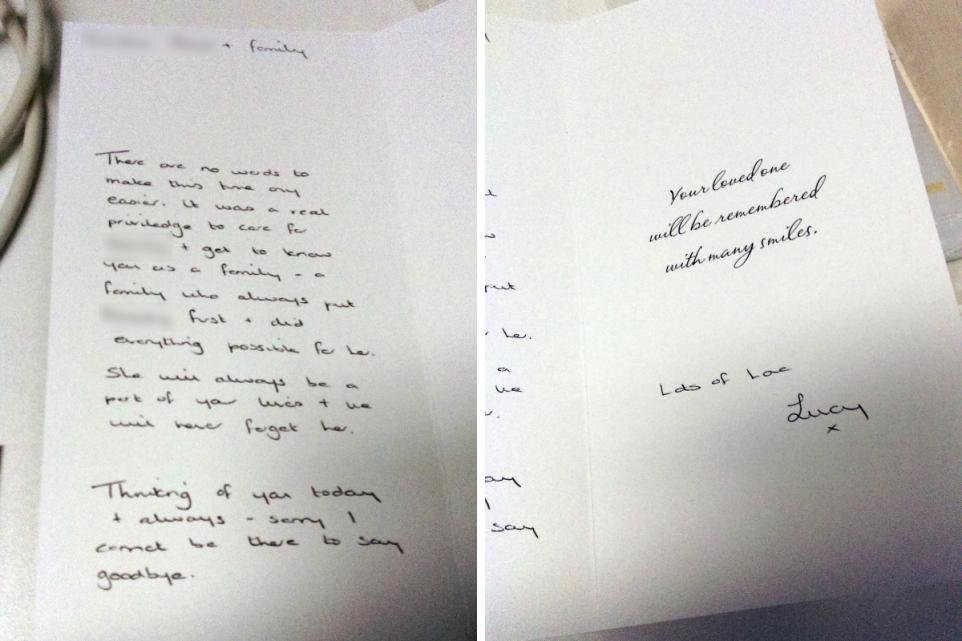
Previously, the court heard from the prosecution that Lucy Letby was asked by police about a sympathy card she had sent to the child's parents. She said it was not normal to do so - and this was the only time she had done so.
The trial is now resuming, with intelligence analyst Claire Tyndall returning to court, to talk through the neonatal unit review schedule in late October 2015.
Lucy Letby in the Witness Box
Direct Examination
Lucy Letby gave this evidence on 15th &16th May 2023.Mr Myers moves on to the case of Child I, a baby girl born on August 7, 2015 at Liverpool Women's Hospital at a gestational age of 27 weeks. She was transferred to the Countess of Chester Hospital on August 18. 'Active problems' noted by Dr Sally Ogden at the time of transfer included 'preterm, [respiratory distress syndrome], establishing feeds, jaundice, suspected sepsis'. September 5-6, 2015, saw a number of events where Child I deteriorated and she was transferred to Liverpool. Mr Myers says Letby is not being blamed for those events. Child I was transferred back to the Countess later that month, and on September 30, at 4pm, Child I had vomiting, brady, apnoea and desaturation, followed by a similar event later that day. Another event happened on October 13 with Child I deteriorating. The following morning, Child I deteriorated and required resuscitation. She was transferred to Arrowe Park on October 15 before returning to the Countess on October 17. Child I had a desaturation on October 22, and died the following morning.
Letby is asked if she had a recollection of Child I. Letby says she does. She was a baby "with us for many months and got to know her [and the family] really well." She had 'complex problems' which required frequent transfer to Liverpool. Child I's abdomen "was always more distended than normal" and there were occasions when that distention would increase, Letby tells the court. Letby confirms to Mr Myers she looked after Child I on many occasions.
A radiograph from August 23, 2015, is shown to the court. Mr Myers says this had been part of what experts classed as a 'suspicious event', with a clinical note at the time recording 'non-specific gaseous distention of the abdomen which is suggestive of [NEC]' in Child I. A record of Letby's work shifts shows Letby was not in work that day.
Letby says she was looking after Child I and two other babies in room 3 on her long day shift of September 30. She says she has "some memory" of that day, "but not great detail". She denies doing anything to cause either of Child I's events that day. She says at 7.30pm, during the handover, she was giving the handover when Child I became apnoeic. Neopuffing was given, and it was noticed the abdomen was distended. An NG Tube was inserted and air was aspirated. Letby reads her notes from that day, including a note that Child I's mum noted the abdomen seemed more distended than yesterday, and Child I had an ongoing low temperature. For the abdomen, it was 'soft to touch', and the bowels had been opened. The 1500 Drs review noted Child I's abdomen was distended, and she appeared 'mottled in colour'. Letby said she asked for the review upon seeing Child I's mottled appearance. At 1600 Child I was fed, and at 1630 Child I had a large vomit and desaturation, and Drs were crash called, and Child I was transferred to room 1. Letby said for the 4.30pm event, she was not at Child I's cotside, but was in the room. She says: "She had vomited and I went over to her, and needed Neopuffing, briefly." Child I was placed on an incubator, a cannula was inserted but tissued. 'Colour appeals pale but improved'. There had been no further vomits, the abdomen still appeared distended. Child I had 'self-correcting desaturations to 80s', which Letby says was not a case when the alarm would be needed. "You have to give the baby time - to see if they self correct, which most babies do...in 30 seconds to a minute." In this case, Letby says, Child I was self-recovering without the need for help.
Letby says she could not say, definitively, whether Child I's mum had left at the time of handover. Letby's notes add: 'At 1930 [Child I] became apnoeic, - abdomen distended++ and firm. Bradycardia and desaturation followed, SHO in attendance and registrar crash called....'Air++ aspirated'. Letby says the air was aspirated after the Neopuff device was used. Bernadette Butterworth's nursing note: 'During handover [Child I] abdo had become more distended and hard she had become apnoeic and bradycardic and sats had dropped. IPPV given and despite a good seal with Neopuff there was still no chest movement, aspirated NGT air +++ and 2mls of milk obtained, eventually got chest movement and sats and heart rate normalised...' Letby says she recalls Child I recovered well afterwards.
Text messages are shown to the court from Jennifer Jones-Key to Lucy Letby, in which she complains a colleague had repeatedly, in the unit, commended Letby for her ability to swap shifts. Letby had replied in the messages, saying it was nice to hear as there had been some 'not so positive' comments about her. Letby added everyone is 'tired' on the unit. Letby tells the court the 'not so positive comments' referred to her being on room 1 shifts when others had felt they needed the experience in room 1. She agrees with Mr Myers everyone had been busy on the unit.
The messages shown to the court -
JJK: Oh it's just [colleague] annoyed everybody last night as she was going on about how
amazing you were doing so many swaps and how naughty you weren't taken off today x
LL: Oh was she? Kinda nice to hear something positive tho as been a few not so nice
comments X
JJK: It wasn't for us and [expletive deleted] people off. I've done loads of swaps and
extras. It was more the fifth time she said it!!! Why won't not nice comments x
LL: Everyone pulling their weight. I think she's just sticking up for me as knows I've had
some rubbish said about me w
JJK: No she just sticking up for her friends and winding everybody else up. Shldnt of said
anything x
LL: I can't speak for [colleague] & I wasn't there. We've all been working hard. X
LL: That's half the problem, everyone tired x
The trial is resuming after a short break. Mr Myers refers to the next
events for Child I. Nursing notes by Ashleigh Hudson on October 13 are shown to the court. The
notes include: '...'pale, pink in colour but well perfused. 0322- when in the nursery,
neonatal nurse Lucy Letby noticed that [Child I] looked quite pale., when turning the light on
for closer examination, we found [Child I] to be very pale in colour and not moving. Apnoea
alarm in situ, had not sounded, breathing was shallow and rr appeared low....monitoring
commenced....30% Neopuff O2 commenced...chest compressions commenced at 0325, no heart rate
heard...' Lucy Letby's note, 'written for care given from 0345' - '[Child I] noted to be pale
in cot by myself at 0320, S/N Hudson present. Apnoea alarm in situ and had not sounded...full
resuscitation commenced as documented in medical notes'. A nursing shift rota is shown for
October 12-13, with Lucy Letby in room 1, designated nurse for one baby. Ashleigh Hudson was
designated nurse for three babies in room 2, including Child G and Child I. Letby says she
cannot recall looking after Child I prior to 3.20am. She recalls going with Ashleigh Hudson
the room 2 together, and noticing Child I looked pale. "Ashleigh was doing something on the
worktop...with her back to the cot. I was in the doorway, talking to Ashleigh."
Mr Myers: "What was the illumination level like?"
Letby: "I can see clearly enough that [Child I] was pale in the cot. [Child I] was in
front of a window. At no point is any nursery in complete darkness. "The only time we have
that is in room 4, for babies preparing to go home. "It's important we need to see them
visually. "We need to see the monitors and the babies themselves." Letby adds the colour level
of a baby "is one of the most important things we assess". "I could see her face and her
hands...she just looked very pale. "I said to Ashleigh she looked very pale and we turned the
lights up". Letby says she cannot recall if the light had been on a dimmer switch, but the
lighting was turned up. Child I was "very unwell" so care was given. The apnoea alarm had not
gone off as, Letby says, Child I was 'gasping' and occasionally taking in air. Letby says she
and Ashleigh Hudson called for help.
Letby says she cannot recall, definitively, whether she had turned up the lights before or after seeing Child I. The court hears a police interview with Letby had said she had told them the lights were turned on before. A subsequent police interview had Letby saying she did not know whether it was before or after seeing Child I that the lights were turned up. "I know what I saw," Letby tells the court.
The court hears further from the police interview. The officer asks if Letby remembered, exactly, the sequence of events. Letby said she did not. "I thought we put the lights on when we went in the room." Letby added, in interview: "Maybe I spotted something Ashleigh wasn't able to spot." Letby tells the court Child I was "in my direct eyeline" when she was at the doorway.
The court is shown photographs of the lighting level in room 2. The
photos were taken in August 2020 and form part of the agreed facts. "Do you recall the room
being as dark as this appears to be?"
"No."
"Would you ever have a high dependency unit...as dark as this."
"No."
"Why not?" Letby tells the court it would not be safe. Mr Myers asks if it was necessary
to turn the lights up afterwards. Letby says it was, as it was necessary for the care of Child
I, such as use of syringes.
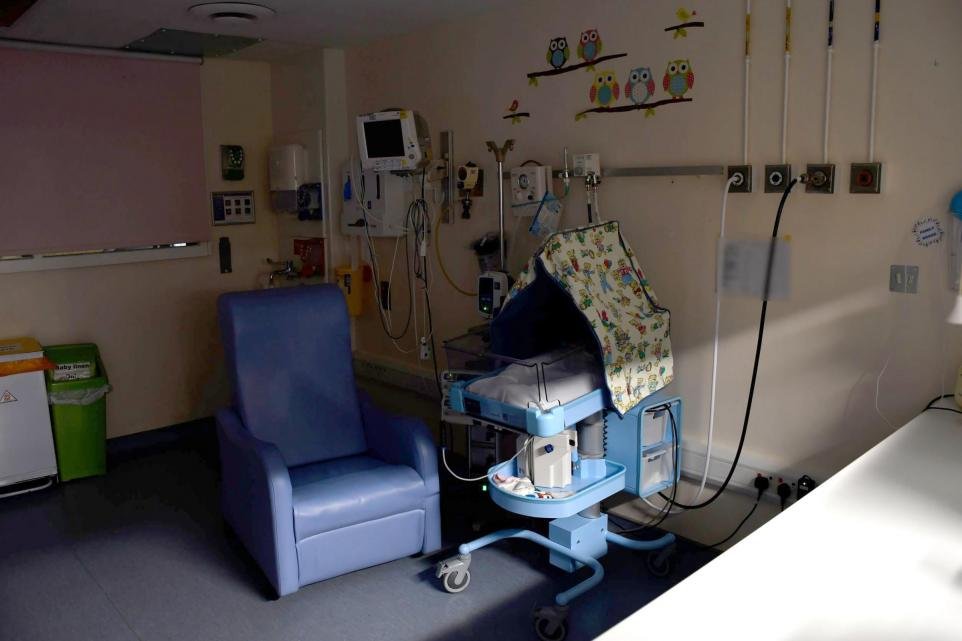
Mr Myers now moves on to the event for Child I for October 13-14. Lucy
Letby was a designated nurse for Child I in room 1, with Joanne Williams designated nurse for
two other babies in room 1.
Mr Myers: "Was there anything you did to make [Child I] feel unwell...on any shift?"
Letby: "No." Letby's notes from the shift at the beginning: '...aspirate obtained. Abdomen
appears full but soft. Some bruising/discolouration evident on sternum and right side of
chest, ?from chest compressions. [Child I] pale in colour...' Letby says the bruising appeared
to have come from CPR the previous morning. Further notes: '...[Child I] tolerating handling
better, tone appears improved, remains pale. Abdomen distended but soft... At 0500 abdomen
noted to be more distended and firmer in appearance with area of discolouration spreading on
right-hand side, veins more prominent. Oxygen requirement began to increase, colour became
pale...gradually requiring 100% oxygen...blood gases poor as charted...chest movement
reduced...continued to decline. Reintubated at approx 0700 - initially responded well. Abdomen
firm and distended. Overall colour pale...' Letby says she cannot recall this sequence of
events from the morning. Shelley Tomlins: '0730-present. Care of [Child I] taken
over...arrived on NNU minutes before arrest. [Child I] had just been retubed when desat/brady
occurred and full resuscitation was required to bring her back...[Child I] stable on
ventilator...abdomen very large, pale and veiny...area of discolouration noted on right side
of abdomen.' Letby recalls there was discolouration, but not specific details. She says she
was not involved in the continued care of Child I, and denies having caused anything which
allowed this to happen.
Mr Myers moves to the event of Child I on October 22-23. Lucy Letby is a designated nurse for a baby in nursery room 2 and one in room 3. Ashleigh Hudson is the designated nurse for Child I in room 1 and one other baby. Letby says she does not have much independent recollection from the night. She says her memory begins from when Child I was being resuscitated. She was alerted to Child I being 'unsettled' at some point, but cannot recall during the night when that was. Child I was 'rooting and appeared hungry', was 'crying and appeared very hungry' - 'sucking on fingers and lipsmacking'. Child I had been 'nil by mouth for a period of time' - Letby cannot recall how long for.
Ashleigh Hudson's notes for that night: '...[Child I] was unsettled and rooting at start of shift, settled with dummy and containment holding. Longline removed due to constant occlusions. Neonatal Lucy Letby unable to flush... 2357: [Child I] was very unsettled, ?due to hunger as was rooting...' Child I did not improve with increased Neopuff oxygen requirements and saturation and heart rate dropped. A crash call was put out by midnight, and Child I was intubated. Child I was later extubated as she was 'working against the ventilator'.
The neonatal schedule chart is shown to the court for October 22, which Mr Myers says does not record Lucy Letby having any involvement with Child I. Letby says she recalls seeing Child I and seeing she was "upset", but was not sure at which time that was. Letby says she cannot recall where she was prior to the 01.06am event when Child I became unsettled again.
Benjamin Myers KC, for Letby's defence, rises to continue asking Lucy Letby questions in the case of Child I. He asks about the events of October 22-23, 2015, and Letby's involvement in those events. He asks if she was involved in the efforts to assist Child I after 1.06am. She confirms she did. She recalls going to see Child I at one point, and helping nurse Ashleigh Hudson settle her, but does not recall at what point that was. She recalls being present when Child I died, and recalls the parents being there. She says it was the first time Ashleigh Hudson had experienced a loss as designated nurse, and Letby says she assisted her in the bereavement procedure for the parents. The funeral of Child I was on November 10, 2015. Letby says "more than two" members of staff attended that funeral, and this was not a usual occasion. She tells the court she was not at the funeral as she was working. Letby's working shifts rota is shown to the court for November, showing Letby was working a series of nights on November 9-10, 10-11 and 11-12. Letby said she was advised by other members of staff to send a card to the family, which would be passed to them at the funeral. Letby's sympathy card is shown to the court. She said she gave it to one of the nurses who was going to the funeral. She tells the court she took the photo while at work. She said it was "normal behaviour" for her to take a photo of the card.
A photo of another card written by Lucy Letby is shown to the court, of her congratulating her "close friend" on the birth of her daughter. Letby says she would "regularly" take photos of cards that she would send, and had done so "for many years". She says she would also take photos of cards she would receive.
Cross-Examination
Lucy Letby gave this evidence on 25th May & 2nd June 2023.Mr Johnson moves on to the case of Child I. Letby agrees she remembers Child I "very well". Mr Johnson says this is "another case where you falsified [her records]."
Letby is asked to look at her defence statement. She said Child I's stomach "bloated...regularly" and "all the nursing staff" were aware of it. Letby said "nothing was ever done" about the concerns with Child I's bowel. Letby said she was one of those raising concerns, that she "was not getting the treatment she needed". The defence statement adds Letby did recall one handover, to nurse Bernadette Butterworth, that Child I desaturated and became apnoeic, and she assisted in care thereafter.
Letby, when asked, rules out staffing levels as a problem that led to Child I's deterioration on September 30. For September 30, Letby was looking after Child I and two other babies in room 3 on her long day shift. Letby rules out medical incompetencies or mistakes made by medical staff that led to Child I's collapse on September 30. Letby is asked to look at Child I's medical records from September 26-29, and observations early on Letby's shift on September 30. Letby agrees Child I was stable at this time. A temperature of 36.1C is recorded for Child I at 11am, and the 'hot cot' temperature was turned up. Letby denies by this time she had "fallen out" with medical colleagues Ashleigh Hudson, Melanie Taylor and one other.
The ward round posted a "positive picture" for Child I on September 30. Letby agrees. Child I was due her immunisations, as noted on the ward round. Mr Johnson says this positive picture was similar to Child G, when Child G was about to have her immunisations. Mr Johnson asks what became an obstacle to that. Letby replies it was Child I vomiting and having to be transferred to room 1.
A feeding chart is shown for Child I for September 30. Mum fed and
gave cares at 10am. The note is signed by Letby. At 1pm a 35mls feed was given via the NG
Tube which had a 5ml aspirate. Letby says the 5ml aspirate "is a very minimal amount". At
4pm a further 35ml feed is given via the NG Tube. On both occasions Child I was asleep. At
4.30pm - 'large vomit + apnoea -> N1' [transfer to nursery 1]. Letby is asked about Child
I's mother's routine.
Letby: "Not specifically..." she adds the mother would visit the unit regularly. Mr
Johnson suggests Letby knew the family so well through the frequent visits that she got to
know their routine when they would be in and out of the unit.
Letby: "I don't agree." Dr Lisa Beebe's note showed she was asked to review Child I
due to a low temperature. The note adds: '...mum reports [low] temperature has been
happening over past few days'. The note concludes: '...monitor closely, if further
concerns for sepsis, screen but appears clinically well at present'. Letby says she does
not recall the conversation. She does not recall, as the prosecution suggests, telling the
doctor one concern[low temperature] and the mother another [abdomen]. She denies
"providing a cover", and says she did "monitor her [Child I] closely", as noted on the
doctor's plan.
Letby says she first monitored Child I's vital signs at 3pm. She said
the concern raised with the doctor was Child I having a low temperature, and she had
adjusted that by raising the hot cot temperature. Mr Johnson suggests that "monitor
closely" would mean more observations.
Letby: "I disagree." Letby is asked how long the 1pm 35ml feed with thickener, as
listed on the chart, would take to administer. She agrees it would take "roughly" 15
minutes. Letby's nursing note, written at 1.36pm is shown to the court: '...3x8 feeds ebm,
2bottles to 1NG Tube. abdomen appears full and slightly distended, soft to touch [Child I]
straining++. Bowels have been opened. Mum feels it is more distended to yesterday and that
[Child I] is quiet. Appears generally pale...Drs asked to review - to continue with
current plan' Letby says: "We monitor all our babies closely" in response to why Dr Beebe
had said 'monitor closely' instead of 'do what you normally do'.
Mr Johnson: "This is yet another example of you writing nursing notes for something
that didn't happen."
LL: "I don't agree." Letby denies "cooking the notes" to show Child I was
deteriorating prior to her collapse.
The trial is due to resume at 2.10pm following its lunch break.
The trial is now resuming. Prosecutor Nicholas Johnson KC is continuing to cross-examine Lucy Letby on the case of Child I. An observation chart for Child I is shown for September 30. Hourly observations are made for 10am-1pm, and 3pm to the rest of the day. Letby says there is "no reason" why the 2pm observation is not made. Letby is asked which 'doctors' reviewed Child I at 3pm. Letby names one doctor and believes it was one doctor reviewed. Mr Johnson says there is no medical note in relation to this. Letby denies "making it up". Mr Johnson asks Letby why the 'bottle-bottle-NGT' feed system is interrupted by 'bottle-NGT-NGT'. Letby says the 4pm, 2nd NGT feed was as Child I was asleep. Letby denies "lyingly" recording notes for when Child I had bowel movements during the day. Mr Johnson says a doctor's notes do not note a prior examination. Letby denies making up the examination in her notes. She adds: "Just because it's [not there] doesn't mean it [didn't take place]."
Mr Johnson says Letby is "very keen" to raise doctor's mistakes with
the likes of Dr Harkness and Dr Gibbs, but not in this case.
LL: "I don't believe this was noted at the time, my priority was [Child I], not
medical notes."
NJ: "You force fed [Child I] didn't you?"
LL: "No, I didn't." Letby says Child I did not wake for that feed, so an NGT feed was
given as "standard practice".
Mr Johnson says "despite all the positive signs" for Child I, she
vomited, just like Child G, and in both cases, Letby was there. Letby says she does not
recall if she was there when Child I vomited. A medical report said Child I: "There is
splinting of the diaphragm due to bowel distention..." Letby denies "pumping" Child I full
of milk or air.
Letby: "I fed [Child I] the normal dose of milk for her feed." A blood gas chart for
Child I is shown - the chart had not been noted up by Letby and it was found on a
clipboard. It was signed by Bernadette Butterworth for Letby. Letby says the chart was
"not hidden - it was there for anyone to see."
Mr Johnson talks about the 7.30pm event for Child I. Letby's notes add: 'At 1930 [Child I] became apnoeic, - abdomen distended++ and firm. Bradycardia and desaturation followed, SHO in attendance and registrar crash called....'Air++ aspirated from NG Tube...[Child I] is now very pale and quiet'. Letby denies forcing air into Child I.
Observations for Child I in the remainder of September 30 are shown to the court. Bernadette Butterworth's nursing note: 'During handover [Child I] abdo had become more distended and hard she had become apnoeic and bradycardic and sats had dropped. IPPV given and despite a good seal with Neopuff there was still no chest movement, aspirated NGT air +++ and 2mls of milk obtained, eventually got chest movement and sats and heart rate normalised...'
Mr Johnson talks about the second event for Child I, which was on the night of October 12-13, when Letby said she was standing in the doorway when she could see Child I looked pale, and the lights were turned up. Letby says the lighting was on in that room so Child I could be seen prior to the lights being turned up. Letby is asked to look at her defence statement. She recalls Ashleigh Hudson was "quite inexperienced" to be looking after Child I. Letby said Child I required "very close monitoring", and adds that, "looking back", Ashleigh had stopped monitoring her when she should have been. Asked to explain where that instruction to monitor Child I came from, Letby says it was policy that Child I should have been monitored as she had come off antibiotics some time in the previous 48 hours. Letby adds: "I'm not saying Ashleigh made a mistake." The judge seeks clarification on 'monitoring'. Letby says it includes monitoring observations if a baby is on a monitor, but otherwise involves keeping an eye, regularly, on the baby.
Mr Johnson says there had been at least 48 hours since Child I had
gone off antibiotics before the event occurred. Letby is asked in what way Ashleigh Hudson
was inexperienced.
LL: "I don't think Ashleigh had a lot of experience in recognising changes in babies,
potentially." Letby says the more experience you have, the more you can detect changes,
such as changes in colour, in a baby. Letby tells the court she does not recall a reason
why she went into room 2 with Ashleigh Hudson. In her defence statement, Letby said as
they entered the room, they turned the light up on the light dimmer switch, and she saw
Child I looking pale, and they went to assist. Child I was "gasping" and the alarm had not
gone off.
Letby rules out staffing levels, medical incompetencies or staffing mistakes as a cause of Child I's desaturation on October 12-13. A nursing shift rota is shown for October 12-13, with Lucy Letby in room 1, designated nurse for one baby. Ashleigh Hudson was designated nurse for three babies in room 2, including Child G and Child I. Letby repeats there was no issue with staffing ratios to babies cared for, for that night. Letby agrees with the evidence Ashleigh Hudson said that Child I was doing well - "prospering", and that the level of care had been scaled back. Before the collapse, Child I was in air and on bottle feeds. Letby says she has "no memory" if Ashleigh Hudson, as said in evidence, left room 2 to help colleague Laura Eagles in room 1. Letby says she had a baby in room 1, and cannot recall who was to look after nursery 2. In evidence, she said she was not the nurse called to room 2. She tells she would have remembered having to hand over care of her baby and look after three babies in room 2.
Letby said "very quickly", she had noticed and saw Child I was pale.
Letby is asked why she was at room 2. She replies there was "nothing sinister" about that,
that she had been in a chat with a colleague.
NJ: "The lights were off, weren't they?"
LL: "I can't say."
Letby is asked to look at her police interview. In it, she says she
had taken over Child I's care as Ashleigh Hudson had been "quite junior". For the
observation of Child I, she replied the lights were off at night, and then they put the
lights on, adding she could see Child I and: "I noticed that she was pale in the cot."
Letby, asked why she had told the jury the lights were "never off", says the lights are
"never off completely", they are turned up.
A second police interview has Letby: "We put the light on - the lights aren't on in the nursery at night." Asked why
she did not refer to a dimmer switch in her police interview, Letby says: "I don't know."
NJ: "Are to trying to massage the evidence by [now] saying the lights were on low?"
LL: "No."
NJ: "What effect does going from a bright corridor [looking into] a [dark/dimly lit]
room have on your eyesight?"
LL: "I don't know.
NJ: "You really don't know?"
LL: "No."
NJ: "Everybody knows, don't they?"
Letby says: "You wouldn't be able to see as well."
Mr Johnson says Letby was able to see "straight away" as she had caused Child I's
deterioration.
LL: "No."
The trial is continuing following a short break.
The photo of the cot, as shown previously, is displayed.
NJ: "Do you agree it is accurate?"
LL: "No...there would be more light visible. The cot would potentially be nearer to
the light.
LL: "I think it was nearer to the workbench than that."
Mr Johnson asks how big Child
I's hands would be -
Letby says they would be small.
Mr Johnson says Child I would be almost entirely obscured.
LL: "Just her hands and her face."
NJ: "Which would be covered by that tentlike structure."
LL: "Not entirely no."
Mr Johnson asks how Letby could spot something Ashleigh Hudson
could not, as mentioned from her police interview.
LL: "I had more experience so I knew what I was looking for - at."
NJ: "What do you mean looking 'for'?"
LL: "I don't mean it like that - I'm finding it hard to concentrate."
Nicholas Johnson KC, for the prosecution, continues to cross-examine Letby in the case of Child I. He moves on to the third incident, on October 14, 2015. Mr Johnson says Letby does not refer to this incident in her statement. Letby, in her evidence, said she did not recall this night.
Letby rules out staffing levels, medical incompetence or staffing mistakes as a contributory factor in the collapse of Child I for this incident.
The staffing rota for October 13-14, 2015 is shown to the court, with Letby in room 1 as the designated nurse for Child I. Joanne Williams is the designated nurse for two other babies in room 1 that night. Letby is asked to look at her nursing notes for that night. Mr Johnson says Child I was tolerating handling and 'tone appears improved', according to Letby's notes. The notes add: 'At 0500 abdomen noted to be more distended and firmer in appearance with area of discolouration spreading on right-hand side, veins more prominent. Oxygen requirement began to increase, colour became pale...gradually requiring 100% oxygen...blood gases poor as charted. Clear air entry, slightly reduced on left, chest movement reduced...continued to decline. Reintubated at approx 0700 - initially responded well. Abdomen firm and distended. Overall colour pale. Xrays carried out...resuscitation commenced as documented...night and day staff members present' Letby says she cannot recall the discolouration now. She does not recall it moved, but it was spreading by getting larger.
NJ: "Where did you get the time of 5 o'clock from?"
LL: "I don't know. I don't know if it's from paper charts or memory."
Mr Johnson says if Letby had seen this, she would have escalated it to a doctor.
LL: "I can't comment on what time the doctor did come." Mr Johnson says almost 24
hours earlier, Child I was found "almost dead", and then this incident happened.
He asks what Letby would have done.
LL: "I would have escalated it to someone, senior like a doctor."
Mr Johnson shows the doctor's note, which mentions: "Abdomen distended and mottled".
LL: "I can't say specifically what time I asked him to come, the note says he came at
5.55am".
Mr Johnson says this would have been an emergency for Child I.
LL: "I don't believe it was an emergency, I believe it showed a decline."
NJ: "You sabotaged [Child I] at about 6 o'clock, didn't you?"
LL: "No."
A prescription chart shows Dr Matthew Neame prescribed morphine
sulphate for Child I, and the infusion was commenced at 5.50am. A fluid chart shows '0530
abdo distended++' in Letby's writing. Letby says by 6am, the oxygen requirement had gone
up to 100% for Child I, from 60% at 5am. Letby had written 'squeaky' for the oxygen level
at 5am. Letby tells the court this meant the air entry for Child I was not clear. Letby
says squeaky air entry is not an emergency. Mr Johnson says there is also expanding
discolouration and a distended abdomen. Letby denies copying the word 'squeaky' for the
5am oxygen column from Dr Neame's 5.55am note.
Letby: "I disagree." Letby says she recalls Dr Neame saying the mottling was unusual;
she cannot recall the mottling specifically.
A report showed Child I's gaseous distention of the bowel had
increased on October 14 since the previous x-ray at October 13. Child I had been on a
ventilator and nil by mouth. Letby denies injecting air into Child I.
NJ: "You had inflated [Child I] with air, hadn't you?"
LL: "No."
At 7am, Child I had a significant desaturation. Letby's note:
'Reintubated at approx 0700 - initially responded well. Abdomen firm and distended.
Overall colour pale. Xrays carried out.'
NJ: "That is because you were sabotaging her, isn't it?"
LL: "No."
Letby says she does not remember the 7am desaturation "with any clear detail".
Mr Johnson moves to the final event for Child I, when she died on October 23. Prior to that, Child I had been moved to Arrowe Park Hospital before returning to the Countess of Chester Hospital's neonatal unit. Mr Johnson shows Letby observation charts for Child I from the previous day. Letby accepts Child I's observations were stable, save for one slightly raised respiration rate reading. She agrees Child I was self-ventilating in air at this point. She accepts Child I's abdomen was, the previous day, soft and non-distended.
NJ: "Would you agree that despite three life-threatening events in the previous three
weeks, [Child I] appeared to be in a stable condition?"
LL: "Yes."
For the night of October 22-23, Lucy Letby is a designated nurse for
a baby in nursery room 2 and one in room 3. Ashleigh Hudson is the designated nurse for
Child I in room 1 and one other baby. Mr Johnson tells the court the baby in room 2 went
to a hospital in Stoke during that night shift. Letby says there were staffing issues,
which were "not ideal", which were a contributory factor in the treatment of Child I
following the collapse, in that a doctor had to be called away during the event.
Letby: "Considering what [Child I] had been through, she was a poorly baby, the
doctors were not with her at all times...once she deteriorated." Letby adds she believed
Ashleigh Hudson was capable of looking after Child I, for Child I's nursing needs at this
stage.
The neonatal schedule for that night is shown to the court. Letby sent a message on October 22 at 8.47pm to a colleague: '...Unit nice. Transport on way to take my baby back to Stoke. Only 8 babies. Off duty not out. X' Mr Johnson says this refers to the baby he mentioned earlier who was transferred out during that night. The court hears that transfer process, noted as completing at 1am, is not a 'five-minute' process, and takes time and involves family communication.
Child I collapsed at 11.57pm. Letby denies falsifying a note for the Stoke-transfer baby prior to that at 11pm. The court is shown a nursing note by Ashleigh Hudson, which the court heard was timed at 10.57pm. 'Longline removed due to constant occlusions; neonatal nurse Lucy Letby unable to flush, so Paeds Reg Rachel Chang informed.' Dr Chang had written, for the Stoke-transfer baby at 10pm, the baby was safe for transfer. Letby's note for this baby was written at 10.50pm, and completed at 10.52pm. It included a documentation of a longline infusion with a 10% dextrose fluid. Letby has co-signed the document. Mr Johnson says the 'original 2300' reading has been changed to '2400' by Letby. Letby said the '2300' reading was an error and it was changed to '2400' as the correct time. She adds: "The charts are there for everybody to look at."
Letby denies falsifying a fluid balance chart for the Stoke-transfer
baby. Mr Johnson asks if Letby recalls what Ashleigh Hudson said for the 11.57pm
desaturation. He says Ms Hudson gave evidence to say Child I was crying, making a noise
she had not heard before, different to a cry for hunger.
Letby: "I did not hear that cry at that point. When I entered that nursery, she was
quiet...and apnoeic." Letby says for this event, it was a case where one of the three
nurses on duty that night would have had to come and assist in room 1.
Letby says she does not recall Ashleigh Hudson going to call for
Child I's parents. Letby says there is an error on the IV chart, and the time has changed.
Mr Johnson: "Three different mistakes on two different babies?" Letby says she does
not know who wrote in the different times.
NJ: "How do those sorts of mistakes happen? Letby says when the unit gets busy, "we"
can make errors on the paperwork.
NJ: "We? Or you?"
LL: "I don't believe it would have been me - we would both have been there for it."
NJ: "Or is it you altering medical records to put some time between you and serious
events for [Child I]?"
LL: "No." Letby adds: "I did not deliberately falsify any paperwork."
At 1.06am, Child I was crying again, the court hears. Letby recalls
Child I was crying, but cannot recall being there by the cotside first. She accepts she
was in the nursery. Mr Johnson asks if Ashleigh Hudson was called over by Letby.
LL: "She might have been in the nursery when I called her, I couldn't say." Letby adds
she could have "come in" [as her defence statement says] from the other part of the
nursery. Letby says she had her hands in the incubator, "trying to settle [Child I]."
LL: "My assessment of [Child I] at that time was she was hungry and rooting."
NJ: "You had pumped her full of air?
LL: "No."
NJ: "You were doing your best to kill her?"
LL: "No."
Letby: "I have never injected air into any baby."
NJ: "Do you remember interrupting [Child I]'s mother?"
LL: "No." Mr Johnson says Child I's mother, in agreed evidence, recalled Letby was
"smiling" and had talked about how Child I had been going on about 'enjoying' her bath.
Child I had been bathed as part of the bereavement process following her passing.
NJ: "Why did you say that?"
LL: "It's trying to, in that awful situation - it wasn't meant with any malice. We
still talk to them and treat them as if they were alive. It wasn't joking or...malice, it
was trying to reflect on a happier memory."
NJ: "How can you say such things?"
LL: "She had her first bath when she was alive and that was what she had enjoyed, not
the one when she had passed away."
NJ: "How do you know it was her first bath?"
LL: "Because I was there, we took photographs, it was a big occasion."
Mr Johnson asks how many baths Child I had in Arrowe Park - Letby says she cannot say.
NJ: "You were getting a thrill out of the grief and despair in that room, weren't you?
LL: "Absolutely not."
Witness Statements Agreed
Family - Mother
The court is now hearing a statement from the mother of Child I, who describes her pregnancy, and found she was having a girl at a 16-week scan.She said at no time during any of the scans were there any concerns. She had "breezed through" past pregnancies, but five weeks after her last scan, her waters broke.
She went to the Countess, who conducted some tests to prove her waters had broken.
She was transferred to the Manchester Royal Hospital, with more blood tests conducted. She was told the baby girl would be born prior to 34 weeks and was 'safer inside' at this point.
She was sent home, with advice to go to the Countess every 2-3 days for blood tests.
After the first of those appointments, she was told not to leave due to the blood results. She was transferred to Liverpool Women's Hospital and was continually monitored.
On the 7th, the mother was in labour, and needed to get to the ward.
She was informed by a midwife she was not in labour, but the mother said she was in contractions.
She was not happy and so spoke to another midwife at the hospital she knew.
A doctor physically examined her, and she was transferred to the labour ward.
The mother said she was "too scared to push", and at some point she was told the baby was in distress, so she pushed.
Child I was born at 9.02pm, following an hour-long labour.
Child I was "doing really well" when born and was brought to the mum, before going to the neonatal unit.
The mother was later told that, as Child I only weighed 2lbs, staff were having difficulty 'getting lines in', requiring scans every time.
The mother was later able to see Child I, who was on a ventilator.
The following day, the parents saw her and she was still in an incubator, but no longer on a ventilator - she was now on CPAP.
A nurse asked if the mother wanted to handle Child I, and the mother accepted, but the saturation levels dropped once the baby went out of the incubator, and the mother was told it was a 'little too soon'.
Over the following days, Child I was 'doing really well', although the mother was informed it would depend whether Child I would pull through, which left her 'petrified'.
However, Child I continued to do 'fine'.
At five days old, Child I was transferred to a high dependency unit at the neonatal unit in Liverpool.
The following day, the family were told Child I could go back to Chester.
The mother said: "We panicked, [Liverpool] was spotless, and [Child I] was settled there.
"At the same time we had heard a virus had broken out among ward 2, so we were then relieved."
Child I was transferred to the Countess of Chester Hospital on August 18.
At first, the mother said they had reservations about Child I's care at the CoCH as the staff didn't seem to have the time for them, as they seemed so busy.
The mother said: "I felt that Chester and Liverpool had different methods (Chester concentrated on feeding, helping babies grow, Liverpool concentrated on getting babies off oxygen support).
All the time, the nurses would explain why they were doing this."
Child I was on CPAP, but the mother said the mask was too big for her, and cotton pads were used to fill the gap, and this left marks on her, which left the mother "annoyed".
Child I was moved to room 2 at the neonatal unit, where the mother met the mother of another baby [Child G].
She was very annoyed at a nurse who appeared to have a cold, which she had had for 'days' and even doctors were aware of, and was in the room. The mother said she did not want her baby to get an infection.
The mother was at home when she received a call about Child I deteriorating in health, and she was transferred to Liverpool.
Staff at the Countess suspected Child I had NEC as her stomach had swelled. She was transferred to Liverpool Women's so she would be close to Alder Hey, if surgery was required.
When the parents arrived, they were informed Child I did not have NEC, and she improved. The mother was 'not happy' that no test was taken to categorically rule out NEC as that could have informed her future care.
Child I was transferred back to the Countess.
The constant stays in hospital were 'beginning to take a toll' on the parents, so they split their time at the hospital.
The mother says she was changing Child I's nappy and was told by Lucy Letby that the baby girl's stomach looked swollen.
Letby said she would keep an eye on it.
That night, the mother was at home when she was informed Child I had deteriorated again and to come to the hospital.
When they arrived, resuscitations were being carried out on Child I.
The swelling to Child I's stomach had 'now gone down' and she was 'doing better', the mother was told by one of the nurses.
Child I was then taken back to room 2.
The mother recalled Child G had also been poorly 'a number of times' at this time in mid September.
Child I was 'looking different' and was looking around, looking like 'a full-term baby', like 'she should be at home in her bed'.
The mother had seen so many people 'not washing their hands and then touching things', so she wanted to get Child I home.
Lucy Letby offered advice on how to bathe Child I, to the mother. She offered to take photos using Child I's mother's mobile, to which the mother agreed.
Letby always appeared 'reserved' compared to other nurses, the mother added.
Child I was put on antibiotics 'as a precaution'. She could go from normal to 'almost dying' within a matter of seconds, the mother recalls.
She says staff 'made a big deal' of Child I's stomach. A test was carried out for cystic fibrosis.
The mother had felt the atmosphere in the hospital 'had changed' and she had concerns whether Child
I would be able to go home. She asked a nurse if that could be the case, and the nurse replied 'We'll see - she comes off antibiotics on Wednesday, so we'll see'.
One day, the mother was sitting there by Child I, when suddenly Child I's oxygen monitor started bleeping. The nurse - not Letby - said it was nothing to worry about, and began fiddling with the monitor.
The mother said when she left that night, things 'didn't feel right', as these had been signs before Child I became very poorly.
The mother was informed overnight Child I's monitor had been switched off as she didn't need it, and her temperature had dropped.
Child I later deteriorated and needed to be resuscitated 'at least 7 or 8 times'.
The hospital believed Child I had a bowel problem. She was not found with a swollen stomach, but was not breathing. The mother believed if the monitors had been kept on, then the situation could've been more closely monitored.
Child I recovered, but with swelling to her stomach and bruising uner her left breast bone.
She 'kept being resuscitated' and the parents were informed about Child I's deteriorations 'every day'.
A doctor told the parents they were concerned Child I 'wouldn't be able to make it.'
A couple of days later, Child I had 'picked up, but was told by a nurse that Child I's heart rate was 'still too low', and it was suggested that Child I would be Christened.
The mother said she felt that by Christening her, it would be like giving up, but they didn't.
Following the Christening, Child I's stats dropped and she was transferred by ambulance to Arrowe Park on October 15.
Arrowe Park then told the parents there was 'nothing wrong with her'. The mother felt the staff were 'being rude' and she felt she had to defend the Countess staff as they had to save Child I's life 'time and time again'.
The Arrowe Park doctor told the mother he 'couldn't understand what she was saying'. The nurse said she was going to give Child I some milk, and the mother said 'no, she's nil by mouth'. The nurse apologised and said she hadn't read the chart. The mother was angry at this.
The mother was told Child I was fine, but when the baby was turned over, she collapsed. The mother screamed at the doctor to do something.
The mother said the journeys between the hospitals would 'take it out of' Child I.
Child I improved and was transferred back to the Countess on October 17.
Child I 'didn't look herself' and it was like she was 'looking through me', the mother said to her mother.
At 12.30am on October 23, the mother woke up to find she had a missed call from the hospital. She rang through to a nurse and Child I had 'a little turn' and had been put on a ventilator.
The mother said she had to get to the hospital as she wasn't happy about Child I being back on a ventilator after all this time.
After ringing back, she was told to get to the hospital 'as soon as she can'. When they arrived, they found staff including Letby were trying to resuscitate Child I. That had been done for 20 minutes.
After some time, the mother said to them: "You can't keep doing this any more."
Resuscitation efforts ceased and Child I was passed into the arms of the mother, and Child I died shortly afterwards.
Two nurses, including Letby, asked if the mother wanted to bathe Child I.
While bathing, Letby was "smiling and kept going on about much she was present at [Child I]'s first bath and how much [Child I] had loved it.
"I wished she'd just stop talking. i think, eventually, she realised. It wasn't something we wanted to hear right now.
"I remember it was Lucy who packaged up [Child I]'s belongings."
The mother was told a post-mortem examination would need to be carried out for Child I, as the cause of death was not known.
In a subsequent statement, the mother clarified a few points from her original statement.
It was at the time she met Letby as she was changing Child I's nappy, and Letby remarked on Child I's stomach.
She said she would normally attend hospital at 9am each day and do the same thing, checking on Child I, speaking to staff, and feed (if Child I was not on a feeding tube). She would also meet family in the canteen.
At around 3pm, Letby walked in and stood by the window, about 6ft away from mother and baby.
She said: "I've noticed her belly is extended today, I'll go and check with the doctor."
The mother agreed. A medical staff member checked the belly and noted it was soft, and it would be examined.
For the October 14 incident, the mother recalls she was staying overnight at the hospital, woken up as Child I was poorly.
On each occasion they were called to the neonatal unit. she does not recall holding Child I's hand as this would have been impossible with so many staff working on Child I.
Consultant neonatologist at Liverpool Women's Hospital
A statement from a consultant neonatologist at Liverpool Women's Hospital is being read out. She gives details of Child I's birth, and said Child I was born in 'very good condition'.
Child I was 'stabilised very quickly' with no concerns, before being admitted to the neonatal unit after being allowed to be shown to her mother.
Child I had 'very good gases' after being put on breathing support device CPAP. There were readings consistent with an infection, but Child I was on antibiotics. A lumbar puncture and phototherapy were commenced. Feeds were commenced, using expressed breast milk, on August 8 and Child I continued to be 'very stable, in spite of having an infection'.
Child I later had desaturations and bradycardias, so a second line of antibiotics was begun. The CRP infection marker was low, but the white blood cell count was elevated. A programme of five days of antibiotics began, and after a short gap in feeds, Child I continued to be fed. Child I was stable when taken off CPAP for short periods of time.
On August 18, Child I was stable on CPAP, having four hours off it. She was tolerating feeds "very well". She had "normal tone, posture and movement".
The team at Liverpool had to wait until a bed became available at Chester before transfer was authorised on 'day 11', when Child I weighed 90g more than her birth weight, which "was good", as it was expected that babies would drop in weight in the days after birth. "We expected [Child I] would continue to improve at Chester".
Upon Child I's return to Liverpool Women's Hospital, her blood gases and heart rate were "normal". It was thought that Child I had suspected sepsis rather than NEC, and a course of antibiotics began to cover for both possibilities. Child I was kept nil by mouth but was "stable" on the night of September 6. There was a "mechanical obstruction" in the ET tube on September 7 and Child I was re-intubated. After this she "had normal gases and improved very well".
Feeds were gradually increased and the course of antibiotics ended after five days.
Child I continued to tolerate and build up feeds, which was a sign the baby girl did not have NEC. The expectations were that Child I would return to the Countess of Chester Hospital and continue to improve.
Unnamed nurse (1)
In a statement to the court, another nurse, who cannot be identified for legal reasons, said that at about this time there were “massive staffing issues” and people were coming in to do extra shifts on the unit.She said it was “mainly Lucy doing a lot” of extra shifts as she was qualified to carry out emergency care if required.
The nurse added: “Lucy was young, living in a doctors’ halls of residence and saving to buy a house.
“She was single and was willing and wanting to do extras.”
Nurse Shelley Tomlins
An 'agreed facts' statement is read out from nurse Shelley Tomlins, who recalls Child I.She said she was the first one who looked after her upon her arrival, and looked after her multiple times.
She recalls Child I "definitely" had feeding and gut problems, and problems with a distended abdomen.
She said "it was like" there were blockages in her bowel.
For September 29, 2015, she was the designated nurse on a long day shift. Child I was "mottled" in appearance, with blotchy skin. She said some babies looked like that "all the time", and for some it was a sign they were not well.
She says she cannot say for certain, but the mottled appearance was "probably" all over her body.
She says Child I had a cardiac arrest "as we were looking at her".
Resuscitation attempts began and the family arrived, along with Dr Ravi Jayaram, consultant doctor.
The nurse describes the procedures done to stabilise Child I.
The nurse recalls a point when the bowels went "massive" and caused another collapse, as it impacted the lungs.
The nurse says the shift was significant for her as it was her last ever shift at the hospital, leaving the hospital a few days later.
Nurse Joanne Williams
Nurse Joanne Williams, in a brief agreed facts statement, recalls being involved in chest compressions for Child I.Laura Eagles, in her agreed facts statement, was also asked about the October 13-14 event for Child I. She recalls from the notes the collapses happened at 7am and 7.45am. She said Lucy Letby was the designated nurse, from looing at the notes.
She recalls who else was on shift and the other babies on that night, and that it was "very busy".
She recalls CPR began at 7.45am, and the 7.45am collapse was more or less a continuation of the 7am collapse.
She said from her memory, Child I was ill for a long time, and it was difficult to separate one event from another in her recollection.
Dr David Harkness
Dr David Harkness, in his statement, said October 13-14 was "quite an eventful night" for Child I.He said Child I deteriorated and required CPR in the early hours.
His next recorded entry was on a ward round later on October 14. He said it was suspected Child I had NEC. She had had two "quite prolonged" cardiac arrests and was on a ventilator. Blood gases were "acceptable but not fantastic, and on the poor side".
There "had been a suggestion of a collapse of the left lung", which would explain why there were problems ventilating her.
Child I's bowels were open, which was a "good sign". Blood culture tests were awaited, for signs of an infection.
Further tests were sought to check for NEC and to monitor Child I's bowels. If the signs were worsening, then surgery would be carried out.
Plans for 1-2 weeks down the line were to insert radioactive dye into the bowels to test for bowel obstructions.
By 4pm on October 14, Child I's signs had improved.
Dr Harkness says NEC is difficult to diagnose without carrying out surgery, and suspected NEC is usually treated with antibiotics.
He says he remembers Child I's death, and the parents coming back a few times over the following year.
Doctor - unnamed [most likely Dr Balamurugan Palanisami]
The next statement is from a consultant doctor at Arrowe Park Hospital. The doctor recalls Child I was transported to the unit on October 15, with suspected NEC/inflammation of the gut, which is "not uncommon" in pre-term babies.The intention was that Child I would be "conservatively managed" at Arrowe Park.
There was previously discussion on whether Child I should be transported to Liverpool Women's Hospital, but the decision was made to keep Child I in Chester. The following day, following further desaturations, Child I was transferred to Arrowe Park.
Child I was "pink, warm and well perfused" and her vital signs were "within normal limits". She was ventilated with oxygen, nil by mouth, on IV fluids then with TPN bags. There was also sedation medication administered.
The plan was to stabilise Child I and continue antibiotics, with seven days of antibiotics and nil by mouth.
An x-ray showed tubes and a long line were in reasonably good positions.
At the end of the shift, Child I was "stable" until a "sudden desaturation" and bradycardia at 12.16am on October 16. She was 'Neopuffed', but there was no chest movement.
A test concluded the breathing tube had potentially moved, so it was removed. At the end of the tube was dark blood, likely from Child I's previous collapse in Chester.
Child I improved in the early hours of October 16 and notes showed no fresh bleeding, and a different form of breathing support began.
Child I was stable in 35% oxygen breathing support, with "no issues" in breathing and it was "reassuring" the tummy looked fine, and the abdomen was soft.
Child I was moved to a high-dependency unit at Arrowe Park and her oxygen support requirements were diminishing.
There was "no longer a need" for tertiary requirement care, so Child I could be transferred back to the Countess of Chester Hospital.
A surgical plan was discussed for Child I, with a dye inserted into Child I to check for bowel obstructions, which would show on an X-ray.
On October 17, the transfer back to the Countess of Chester Hospital was confirmed, with Child I being transported back at 11am.
Nurse Christopher Booth
In a statement read to the court, nurse Christopher Booth said staff had got to know Child I and her family “really well” from her time on the unit since August 2015.Child I was “quite a character herself”, he said.
Mr Booth said: “We all were fond of her and had high hopes for her. It was gut-wrenching for the (nursing) team as a group.”
He said he wrote to the ward manager to say the team involved in the resuscitation efforts were “all heartbroken”.
Mr Booth said: “I wanted her to know that as a team everyone had tried their hardest and did their best.
“If we were not such a good team we would have crumbled because there were so many horrible things going on.”
Nurse Melanie Taylor
Fellow nurse Melanie Taylor said staff were “devastated”.She stated: “It was just pure shock. She was stable before that.
“I think her parents came in during resus. I remember them walking into nursery 1 and standing there, not really knowing what to do and myself not knowing what to say.
“The actual resuscitation is a bit of a blur to be honest.
“I remember right at the end, the doctor decided to call it and said we should stop.
“I had been looking at and the monitor, thinking she is going to come out of it.
“My heart just dropped. When he said ‘stop’ I was just devastated, especially when I looked at the parents.”
Nurse Valerie Thomas
Nursery nurse Valerie Thomas recalled she took a phone call from Child I’s mother who asked for an update from the first collapse.She said: “I went into room 1 and said (Child I’s) mum was on the phone, not realising was being resuscitated there.
“Lucy Letby said her parents should come in.”
Witness Evidence (child I)
Unnamed nurse (2)
A NURSE could not remember telling a mother her child "didn't die of prematurity", the murder trial of Lucy Letby was told.
Fellow nurse Letby, 33, is accused of murdering the baby girl, known as Child I, on her fourth
attempt, while she was being cared for at the Countess of Chester Hospital’s neo-natal unit.
She had looked after Child I the night before she died on October 23, 2015, and had dressed the baby, who had become “very unsettled”, Manchester Crown Court heard on Thursday, January 25.
The nurse, who cannot be named for legal reasons, said: “Mum came in and asked why I had dressed her and I explained I wanted to see if it settled her.
“I don’t remember saying to her that didn’t die of prematurity. I only remember the babygro part of the conversation.”
Nurse Bernadette Butterworth
On the afternoon of September 30, she required breathing assistance from nursing staff via a face mask, after she had a large vomit and her blood oxygen levels and heart rate plummeted.The defendant, who was Child I’s designated nurse on the shift, handed over her care to night-shift nurse Bernadette Butterworth in the early evening, when the youngster deteriorated once more.
The oxygen face mask was used again but no chest wall movement was detected, the court heard.
Miss Butterworth noted Child I’s swollen tummy and asked Letby to aspirate her nasogastric feeding tube, which obtained a “fair amount of air” and 2ml of milk.
She told the court: “She settled down. She came back to normal, her heart rate and respiratory rate.”
Doctors suspected a bowel problem as they prescribed antibiotics and ordered blood tests and X-rays.
GP Lucy Beebe
GP Lucy Beebe told police she saw a tearful Letby in conversation with a colleague in one of the care rooms at the unit.Giving evidence on Friday, Dr Beebe said: “I remember Lucy crying with another nurse and it was very much of the gist of ‘it’s always me when it happens, my babies, it’s always happening to me a lot’.”
Prosecutor Philip Astbury asked: “Who was saying that?
Dr Beebe replied: “Lucy.”
Mr Astbury said: “You can’t remember precisely when that was?”
“No,” said the witness.
Dr Beebe said she cared for a premature-born girl, Child I, during her spell as a GP trainee doctor at the Countess of Chester.
Dr Beebe said: “I recall because it was unusual that she was seemingly well and then became unwell.
“In my memory I felt like she was shipped out to a tertiary centre, made a rapid recovery and then was brought back very quickly.
“It certainly stuck in my memory because it had never happened to a baby I had been involved in the care of before or since, at any of the neo-natal units I worked at.”
Asked about her reaction to Child I’s death, she replied: “Shock and frustration at the time because on reflection I felt there was something else going on with that we were not getting to the bottom of.
“It was sad because I remember the family and the whole situation was just very sad and frustrating.”
Dr Beebe agreed with Ben Myers KC, defending, and also told police, that Letby’s tearful exchange “seemed a pretty normal reaction” given the upsetting events at the hospital.
Nurse Ashleigh Hudson
Nurse Ashleigh Hudson told jurors the lights in a nursery were switched off, rather than dimmed, when she discovered Child I “pale and floppy” in her cot in the early hours of October 13.Miss Hudson was Child I’s carer on the night-shift but she said she asked Letby or the nursing shift leader to keep an eye on the youngster as she was required to help a colleague with a routine procedure elsewhere.
She said that procedure took about 15 minutes and she then walked to a store room to collect Child I’s milk.
On her return to nursery room 2 she started preparing the milk for a feed on a counter which faced the lit corridor, she said.
She said: “I can remember at one point in time Lucy was standing in the doorway. She was leaning up against the frame. She pointed out from where she was that she thought looked pale.”
Letby was “about 5ft/6ft” from the cot but Miss Hudson said she was closer and could not see Child I’s face as the top half of the cot was obscured by a canopy.
Fellow junior prosecutor Simon Driver asked: “Was there anything about the circumstances, the layout or the lighting within that room, which afforded Lucy Letby a better view than the one you had?”
“No,” replied Miss Hudson.
In August 2020, the court heard, Miss Hudson was taken to the unit by police officers to help her recollection of the position of the cot and the lighting at the time.
Cross Examination
Mr Myers asked: “It’s impossible, isn’t it, to recall precisely how the lighting was five years previously?”
Miss Hudson said: “Not precisely. It is an image that has been imprinted on my brain for quite some time. It’s quite vivid.”
Mr Myers said: “Is it possible that the nursery light may have been low on the dimmer rather than off?”
Miss Hudson said: “No, it was off.”
The witness said she had stood in that doorway at night and had looked at a cot in that position but it had not provided her a clear vantage point.
Miss Hudson said she approached Child I’s cot side, pushed back the canopy and peeled off her blankets.
Wiping away tears, she told the court: “That’s when I noticed she was in quite poor condition.
“She was incredibly pale in colour, almost white. She didn’t respond to me. She was very still.
“She was floppy and she was making gasping breathing movements – a handful of times within a minute.”
Prosecution
Mr Driver asked: “What was your first thought when you saw at close quarters in that cot?”
Miss Hudson replied: “My first thought, and worry, was that she had deteriorated so rapidly that it was too late. The change in her had been remarkable.”
She said she gave Child I ventilation breaths via a face mask before Letby took over with the airway while she began chest compressions.
Child I eventually recovered after nurses and doctors fought to resuscitate her for more than 20 minutes, the court heard.
Miss Hudson said Child I was in “good clinical condition” at the start of the shift.
- -
Nurse Ashleigh Hudson is now being recalled to give evidence in the case of Child I.
The nurse is asked to look at nursing notes she had compiled early on October 22, a summary of the care provided to Child I.
She says Child I's heart rate was normal, the respiration rate was slightly elevated on a one-off reading, while her temperature was stable.
She was in room 1 of the neonatal unit, but "not an intensive unit baby" at this time. She was placed there as "a precaution measure" due to her recent medical history.
She was in an incubator, again as a precautionary measure due to her recent history, the court hears.
The nurse said the oxygen saturation levels, recorded as "96% and above", were "optimal".
Child I was "pink and well perfused", with "minimal aspirates recorded, clear fluid. Abdomen soft and non-distended," according to nurse Hudson's notes.
"She was a very stable baby considering the weeks prior," the nurse tells the court.
Child I would still have been classed as an 'HDU' baby [high dependency], as nurses would have had to check the long lines every hour, the court hears.
The nurse says she does not recall anything of note happening during that night shift on October 21-22.
Nurse Hudson recalls she was aware Child I was facing a medical procedure at another hospital which was 'urgent, but not an emergency'.
She said she took over care of Child I at 7.45pm on October 22. The prosecution ask why it would be 7.45pm rather than, say, 8pm. The nurse replies the handover was likely briefer than usual, as there was not a lot of information to pass on for Child I from the day shift at this point.
Child I's observations for heart rate and respiratory rate were satisfactory, while the temperature and oxygen saturation readings were "optimal".
Child I was not receiving ventilator support at this time.
Child I was "unsettled and rooting at start of shift" and the longline was removed due to constant occlusions. Lucy Letby was "unable to flush," so paediatric registrar Rachel Chang was informed.
Nurse Hudson's note continues: 'Dressing stripped and line pulled back, still not flushing, so removed.'
'No Oedema or duskyness'
The nurse recalls Child I reacted to the procedure "very well". Sucrose was offered, but Child I was happy with dummy. The baby girl was "pink and well perfused at this time, awake and alert".
The sucrose was sugar water which would be offered as pain relief, but if the child was happy enough to stay with the dummy, the sucrose would not be "pushed further".
The nurse said Child I was "generally quite easy to settle" and would settle "quite quickly", and would be "quite happy" when put into a cot or incubator.
The nurse recalls the events leading up to midnight.
She says, just prior to midnight, Child I was very unsettled, and tried the usual methods of containment holding, sucrose and dummy, which did not work.
She tried repositioning Child I so she was on her stomach, which sometimes settled her, but Child I continued to be very unsettled and cry.
She says sucrose would be administered for a child as a comfort measure to a child who was otherwise nil by mouth.
Child I would be placed on her stomach with her head to one side.
She said the measures to settle her "would generally work" with Child I and with other babies in general.
The nurse says she was familiar with Child I's crying, and this was an "atypical" episode.
She said it was a "type of cry I hadn't experienced her make before - loud, relentless, almost constant.
"Just a constant, very loud [cry] - something I had not heard from her before."
The repositioning was the last of the calming measure attempts.
Within seconds of that, Child I "became very quiet" and had "pauses in her breathing".
The nurse said she turned the child back on to her back and shouted for help.
"Was there a problem at this stage?" the prosecution ask.
Nurse Hudson: "Yes."
She said Child I's oxygen levels started to decrease, along with her heart rate. Ventilation breaths were given by nurse Hudson, with Lucy Letby providing assistance.
The nurse said after less than a minute, after realising it was an "acute episode", a crash call would be made to alert doctors.
The nurse recalls, from her notes, Child I was apnoeic, and dusky in appearance."
A Neopuff device was used to provide breathing support with 30% oxygen. 'Neopuff applied due to colour and apnoea.
'Colour didn't improve and [oxygen saturation and heart rate] began to drop rapidly until [oxygen saturation] 47% and [heart rate] 50. Neopuff increased to 50% then 100% with no effect."
Cardiac compressions began, and Child I was placed on a ventilator. Child I had become 'more alert and crying. Abdomen soft and non-distended prior to resuscitation, no change from handover."
Child I was recorded to be fighting the ventilator. The nurse says that was a sign Child I had recovered quite quickly, but keeping the child on the ventilator in that condition could cause lung damage, so a decision was taken to remove her from the ventilator.
Child I was "seemingly displaying normal behaviour despite what had happened" as she was also 'still rooting'.
The nurse says this episode, at about midnight, was a "very quick resuscitation" from her recollection, and no medication needed to be administered.
The court hears Ashleigh Hudson "managed to get through to [Child I's] parents after many attempts" regarding the first resuscitation. She said it was to be expected as it was the middle of the night.
Afterwards, Child I was "seemingly back to normal" with "nothing to cause concern" during that time after the first resuscitation.
Just after 1am, she was near, but not inside, nursery room 1.
The nurse says she was first alerted to Child I desaturating either from an alarm sounding on the monitor or from Child I crying.
Nurse Hudson recalls: "Lucy was already with her [at the incubator], trying to settle her. At that time [Child I's] observations were normal."
She says child I was crying "the same cry I had heard her display the first time [that night].
"Loud and relentless and unlike any other cry I had heard make prior to this night shift."
"My initial concern was she was obviously breathing...my concern was the cry was that she was going to have another episode of collapse."
She recalls articulating that concern to Lucy Letby within 60 seconds of being there.
The nurse says she said words along the lines of: "She's going to do it again, it's the same cry."
Letby responded with words of "reassaurance": "She just needs to settle," Ashleigh Hudson recalls Letby saying.
Child I became quiet, with pauses in breathing, and she became bradycardiac and her saturations "started to drift".
Oxygen delivery began again, along with ventilation breaths. They shouted for help from colleagues.
Nurse Hudson says she does not recall direct further communication with the parents, as the staff were "all in the thick of it" trying to resuscitate Child I.
The court is shown the October 23, 6.25am note by Ashleigh Hudson: "*NGT on free drainage, produced 2mls. Minimal aspirations of clear mucus and air++ during both resuscitations. Green stool and urine present post resus."
The nurse said, given previous abdominal issues for Child I, she had wanted to "make clear" what was observed during those resuscitations.
Cross Examination
Ben Myers KC, for Letby's defence, is now asking nurse Ashleigh Hudson questions.
He says the questions he is to ask, while technical, are not for lack of sympathy.
He says that in between the shifts she was looking after Child I, she was aware there had been further arrests and desaturations. Nurse Hudson agrees, and agrees that Child I was "very ill" when she had gone to Arrowe Park Hospital.
He asks if Child I needed to be looked at closely, and "there is always the potential for deterioration".
Nurse Hudson: "Yes."
"She is never completely out of the woods?"
"Yes."
"You can never become complacent."
"That was my view at the time."
Mr Myers says nurse Ashleigh Hudson was in the first 8-9 months of trained care at the time in October 2015, and would not have been intensive trained at this stage.
Ms Hudson says there were certain medical procedures which she would not be trained for at this stage, and it meant when those needed to take place, other staff, such as Lucy Letby, would do them for her.
Mr Myers asks if Child I looked unsettled at times because she was getting hungry.
"Yes."
"And at times can they be quite shouty and angry [when hungry]?"
"Yes."
Mr Myers refers to the night shift of October 21-22, to the nurse's note 'unsettled at start of shift and rooting, settled with dummy'. He asks if that was the behaviour exhibited because Child I was hungry. Ms Hudson agrees.
Mr Myers refers to a note by colleague Caroline Oakley, which notes 'unsettled at times; obviously very hungry but settles with dummy'.
Another note, by Ms Hudson, for the start of the night shift on October 22, records '[Child I] was unsettled and rooting at start of shift [7.45pm], settled with dummy and containment holding.'
Mr Myers says the issue of the long line had to be resolved during the night, which was resolved between 10.15-11pm.
Ms Hudson replies Child I was "very sensitive". Mr Myers said due to the cannula insertion and long line removal, Child I was not receiving fluid via the long line at this point.
He asks if the handling of the lines can have a distrubing effect on the baby, would there be an increase of the monitoring?
Ms Hudson says the monitoring did continue, it was just not recorded on the observation chart at 11pm, and was still visible on the electronic monitor.
Mr Myers says "All the things you would normally do to settle [Child I] didn't work?" [just before midnight]
Ms Hudson replies she called for help once she noticed Child I was "seemingly in distress, clinically", after noticing gaps in breathing after repositioning Child I. Letby arrived in response to the call for help.
Ms Hudson explains the note '[Child I] was very unsettled - ? due to hunger as rooting." She says the '?' means she was not sure of the cause.
Mr Myers asks if Neopuff was used up to the point of ventilation. Ms Hudson replies she was not sure, she would give Neopuff assistance in response to what could be seen at the time.
Child I 'attempted to cry' before being ventilated.
Mr Myers said Ashleigh Hudson was aware of Child I's history of abdominal distentions.
Ms Hudson replies she paid "specific attention" to the abdomen with this knowledge, and noted it was 'soft, non-distended' at this time.
Mr Myers said Child I recovered and 'looked better than before the incident took place?'
Ms Hudson: "Yes."
At 1.06am, Child I deteriorated once more.
Ms Hudson said she was alerted either via an alarm or Child I crying.
Mr Myers said once she entered, Lucy Letby was trying to settle Child I with a dummy. "Was this, in effect a repeat of what had gone on earlier?"
"Yes."
"You said you were concerned there was going to be a repeat...and Lucy Letby was trying to reassure you...she was going to be all right?"
"Yes."
Mr Myers refers to the family communication note, in which it was discussed with parents for Child I to be bathed, to make hand and foot prints, have photographs and gave consent for hair to be cut, and kept in the memory box.
Ms Hudson said this was the first time she had been involved with this bereavement procedure, and Lucy Letby assisted, before colleague Caroline Oakley later took over and completed the procedure.
Prosecution
The prosecution rise to clarify the noise made by Child I.
"It was loud, almost like a repetitive noise, relentless. In my interpretation, it would indicate distress, and was markedly different from before when she would express hunger, for instance."
The judge asks Ms Hudson for this 'rooting gesture' to be explained.
Ms Hudson says it's a classic gesture by babies, usually done before they cry. It can be a very specific behaviour where they rock their heads and stick their tongue out, smacking their lips.
That concludes the evidence from nurse Ashleigh Hudson.
Dr Matthew Neame
Giving evidence on Wednesday, February 1, registrar Dr Matthew Neame told Manchester Crown Court the premature-born infant, known as Child I, was “stable” when he examined her at 10.05pm on October 13.He said he thought Letby asked him to see Child I at 5.55am on October 14 as her oxygen requirements had increased.
On examination, Dr Neame noted her abdomen was “distended”, “mottled” and with “some tenderness”.
He said he noticed Child I’s eyes were open and she “grimaced”.
Dr Neame said: “I don’t recall it clearly but it’s unusual to see mottling on the abdomen.
“My impression was the increase in abdomen distension may have caused (Child I’s) lungs to be squashed… making it hard for her to breathe.”
The court heard Letby retrospectively noted that at 5am Child I’s abdomen was “more distended and firmer in appearance with area of discolouration spreading on the right side”.
Letby, who was Child I’s designated nurse, noted she gave antibiotics at 5.05am.
She also retrospectively noted that at 5.30am Child I’s “abdo distended ++”.
Jurors were told that at 7am Child I had a “significant” drop in blood oxygen levels and heart rate.
At 7.45am, her heart rate fell “dangerously low” to below 60 beats per minute, said Dr Neame, which prompted CPR to begin.
Thirteen minutes of resuscitation from medical staff followed before she recovered.
The court has heard evidence of numerous babies having a “mottled, discoloured” appearance before collapsing.
Cross Examination
Ben Myers KC, defending, asked Dr Neame: “Your view is mottling normally means circulation is not as good as it should be?”
Dr Neame replied: “That’s right.”
Mr Myers went on: “And the underlying cause could be infection in some cases?
Dr Neame said: “Yes (but) when seen infection is usually accompanied by other signs.”
Mr Myers said: “Or low oxygen levels?
The witness said: “It can be.”
Dr Rachel Chang
Giving evidence on Friday, registrar Dr Rachel Chang said there were no concerns over Child I prior to midnight.She was then crash bleeped to attend the cotside of the youngster who suffered a sudden drop in heart rate and blood oxygen levels.
Child I stabilised after she received cardiac compressions and breathing support, the court heard.
Dr Chang said: “I didn’t have any worrying thoughts. She has had an event. She had had lots of events.
“But I had to work with what was in front of us, which is that she recovered very quickly.”
About an hour later Child I similarly deteriorated but doctors and nurses, including Letby, were unable to revive her in a prolonged resuscitation attempt.
Dr Chang tearfully recalled how Child I did not respond to initial chest compressions and ventilation efforts.
Philip Astbury, prosecuting, asked: “Have you reflected on the death of and the causes?”
“Yes,” replied Dr Chang.
Mr Astbury said: “And the shift, generally?”
Dr Chang said: “Yes.”
Mr Astbury said: “What has that caused you, if anything, to think?”
The witness replied: “Just that I have been never able to truly explain it. That it was awful.
“But I was never worried. I knew we had done everything and I did everything I’d done the first time I attended.
“I trusted everyone around me implicitly.”
Dr John Gibbs
Taken from BBC article 09/02/2023Dr John Gibbs said he had written in his medical notes that he could not assign "a clear cause of death".
Ms Letby denies murdering seven babies and attempting to murder 10 others.
It is alleged the neonatal nurse attempted to kill the infant on 30 September and again during night shifts on 12 and 13 October.
The prosecution claim she harmed the baby by injecting air into her feeding tube and bloodstream before she eventually died in the early hours of 23 October 2015.
Manchester Crown Court heard how Dr Gibbs was called in urgently after Child I had rapidly deteriorated, arriving on the neonatal unit at 00:06 GMT.
"The nurses were telling me that she suddenly seemed very distress and was making an abnormal cry and that was about 10 minutes before I arrived," he said.
Child I required chest compressions but these were no longer needed by the time Dr Gibbs arrived on the unit.
He told the court Child I was "fighting" the ventilator, which meant she was resisting and was a "good sign".
But he told the court he "could not understand what natural disease could have affected her that she would have recovered so quickly".
In his medical notes, he had written: "Likely generalised lung collapse - very stiff, small vol [volume] lungs due to distress and crying".
"My suspicion was that she had cried in distress and her lungs had become much smaller and it was hard for her to breathe," he told the court.
But he added: "I admit I was struggling to understand exactly what had happened to [Child I]."
He said he returned home once Child I seemed stable, adding she was "settled, sucking her dummy [and] looking like a well baby when I left".
But within 30 minutes, he had been urgently called back to the neonatal ward as Child I had collapsed again, arriving at 01:23.
The court heard Child I was given CPR and repeated adrenaline but at 02:10 resuscitation efforts were stopped.
"We had been trying to help Child I vigorously for 50 minutes and she still had no pulse of her own, no breathing on her own and we had tried I think eight doses of adrenaline. It's often futile to continue," he said.
Child I was pronounced dead at 02:30.
"I didn't know or couldn't understand why she had collapsed and died," he said, adding he had reported her death to the coroner's office because of this.
"I felt [Child I] needed a post-mortem but it was the coroner's decision," he said.
Medical Experts Evidence
Professor Arthur Owens
Taken from Dan O’Donohue Twitter 03/02/2023Consultant paediatric radiologist Owen Arthurs is first up in the witness box this morning. He's giving expert evidence on CT scans, X-rays and other images in this case
Dr Arthurs has said there is evidence of pneumatosis (gas within the wall of the small or large intestine) on an X-ray from 30 September of Child I
Dr Arthurs has said Child I had a 'normal' bowl, as per her X-ray on 18 October and into 20 October. Looking at an X-ray from 23, there is a 'massive' dilatation of the stomach
Dr Arthurs says it is 'quite unusual to see babies with this degree of dilatation of the stomach', he says it can cause 'splits in the diaphragm' and that can lead to 'respiratory complications'
Asked how much air it would take to generate such images, Dr Arthurs said: 'We don’t know, I don’t think anybody really knows. Those experiments can’t really be carried out, we can’t experiment on babies giving them 50 or 100mls of air and taking x-rays'
He adds: 'I would guess more than 20mls of air' He is asked, in the absence of another explanation, whether 'someone has deliberately injected air' Dr Arthurs says 'I think that stands to reason'
Cross Examination
Ben Myers KC, defending, is now questioning Dr Arthurs
He put it to Dr Arthurs that from X-rays alone it was "not possible to establish a precise cause" of the air being present, Dr Arthurs agreed
Dr Dewi Evans
On Thursday, February 9, retired consultant paediatrician Dr Dewi Evans gave expert evidence at Manchester Crown Court, in the trial's first day of evidence since the previous Friday.He stated that, in his opinion, Child I had on the first three occasions been injected with air into her stomach via a feeding tube.
But an “extremely disturbing phenomenon” of Child I’s noted “relentless, loud” crying prior to her final collapse led him to believe a different method was used.
The first collapse, he told the court, was “out of the blue”.
Dr Evans said: “She was entirely stable right up to the point of collapse.
“My opinion was that had been subjected to an infusion of air. In other words, air had been injected into her stomach.
“That interferes with your ability to move your diaphragm up and down, and that interferes with your breathing.”
He said there was “striking evidence” from an abdominal X-ray which showed “lots of air”.
Dr Evans said he came to the same conclusion that Child I had suffered “splintering of the diaphragm” in the early hours of October 13.
On the following night shift he said her condition deteriorated again “as a result of some kind of event that had interfered with her breathing”.
In one report he prepared he wrote this collapse was “also suspicious and suggestive of inappropriate care, most likely due to the perpetrator injecting a large amount of air via the naso-gastric tube”.
He told the court an X-ray showed an “astonishingly large amount of air” in her stomach.
Dr Evans said Child I was again stable prior to a sudden deterioration shortly before midnight on October 22.
The court has heard Child I quickly recovered after medical staff gave her breathing support but less than an hour later she deteriorated again.
Nurse Ashleigh Hudson told jurors about Child I’s “relentless” and “very loud” crying from her incubator at just before midnight.
Dr Evans said: “Ashleigh Hudson’s evidence was very moving because nurses and doctors know what a normal cry sounds like.
“Babies will cry if they are hungry, or if you take a blood test because it hurts.
“This was very abnormal. A different kind of a cry. I interpreted it as the cry of a baby in pain and in severe distress.
“That is an extremely disturbing phenomenon. There was no obvious explanation why she was crying relentlessly and it was very loud.”
Asked by prosecutor Nick Johnson KC as to what his conclusion was for the cause of the fatal collapse, Dr Evans replied: “I think she was the victim of air being injected into her blood circulation. This probably explains her crying and distress, and the failure of the medical team second time round to save her life.”
Cross Examination
Dr Evans agreed with Ben Myers KC, defending, that Child I had recurrent episodes of a swollen stomach and oxygen desaturations during her time at the unit.
But he disagreed with his suggestion that Child I was “in general a very poorly baby regardless of the events we are looking at”.
Dr Evans said he thought both collapses on the night shift of October 22/23 were due to injections of air which caused a blockage to the passage of blood.
He said he could not say how much, or how quickly, air was administered as there was “not a great deal of research” available on air embolisms in babies.
Dr Evans denied Mr Myers’s assertion that it was “utter guess work” on his part.
The expert said: “It is consistent with what has happened in previous cases here.”
Extra info from Daily Round up 10/02/2023
On Thursday, Manchester Crown Court was told Dr Evans was criticised over his involvement in an application for permission to appeal against a care order involving two children – in a case unconnected to Letby.
Dr Evans supported the parents’ desire to have increased access to the children who were being cared for by their grandparents, the court heard.
Refusing permission last December, Court of Appeal judge Lord Justice Jackson said Dr Evans’ report was “worthless” and “makes no effort to provide a balanced opinion”.
He went on: “He either knows what his professional colleagues have concluded and disregards it or he has not taken steps to inform himself of their views.
“Either approach amounts to a breach of proper professional conduct.
“No attempt has been made to engage with the full range of medical information or the powerful contradictory indicators.
“Instead the report has the hallmarks of an exercise in ‘working out an explanation’ that exculpates the applicants.
“It ends with tendentious and partisan expressions of opinion that are outside Dr Evans’ professional competence and have no place in a reputable expert report.
“For all those reasons, no court would have accepted a report of this quality even if it had been produced at the time of the trial.”
Dr Evans told Ben Myers KC, defending, he had sent a letter to a firm of solicitors on the subject which he said was not intended to be used in an appeal.
He said: “I had no idea it had been sent to the court. I had no idea about this judgment until about two weeks ago.”
Dr Evans said he was “more than happy” to stand by his report.
He said: “This is the first judgment that has gone against me in 30 years.
“I have prepared dozens and dozens of reports for the family court. I’m in huge demand for opinions in the family court because of my track record as a witness.
“This is a one-off for me.”
Asked about the judge’s criticisms, he said: “I think it’s a balanced opinion actually.
“I do object to being called partisan. If you are partisan you don’t survive in the courts for long. My reports are impartial.”
Mr Myers said: “This report was brought to the defence’s attention but not by you. “If we hadn’t known about it and no one had known about it but you, would you have kept it to yourself?”
Dr Evans replied: “I didn’t know about it. If I had known about it, I would’ve informed the court.”
He told Mr Myers this was “cherry-picking of the worst kind”.
Mr Myers went on: “The reference to ‘working out an explanation’, that is precisely what you are doing in this case at various points, isn’t it?”
Dr Evans said: “It is not.”
Dr Sandie Bohin
Dr Bohin says the cause of the first of Child I's collapses were via air administered into the naso-gastric tube.She said it would cause the abdomen to distend and "squash" the lungs, further compromising them.
Dr Bohin said, other than the distended abdomen, there were no other symptoms of NEC, a gastro-intestinal condition that Countess staff had considered as a diagnosis.
She tells the court there were no pathological reasons why the abdomen was distended, having seen an x-ray.
Dr Bohin said Countess staff did not always fill in the boxes on the chart whether a naso-gastric tube was removed or replaced. She adds the nursing staff tend to leave naso-gastric tubes in place for several days, as the procedure, while it takes "seconds", can be uncomfortable for the baby.
For the symptom of bruising on the baby girl in the second collapse, Dr Bohin rules out the cause of CPR, and "deduced" it was down to an air embolism.
For the third collapse of Child I, Dr Bohin says her opinion, based on the x-ray, the collapse, the distended abdomen and the discoouration, was via air administered into the bowel and vein.
For the fourth collapse, in which Child I ultimately died, Dr Bohin says the cause of the collapse was an air embolus, via air administered via an IV line.
She said the "extremely unusual" level of crying by Child I was "very different" and the baby girl must have been in "severe pain", and that led her to believe the cause had been via an air embolus.
Cross Examination
Benjamin Myers KC, for Letby's defence, is now asking Dr Bohin questions.
He says Dr Bohin had peer-reviewed Dr Dewi Evans's reports. She replies she has given an independent report.
Dr Bohin adds she believes Mr Myers is asking if she has merely rubber-stamped Dr Evans's reports, which she says is "less than discourteous", saying she has disagreed with some of his findings and added her own evidence.
She says she has reviewed the case and come with her own opinions, and has not "backed up" Dr Evans's reports.
Mr Myers says Dr Bohin would not have come up with the conclusion of an air embolus without first reading Dr Evans's reports. Dr Bohin disagrees.
She says she has twice seen the symptoms of air embolous, in one case involving a baby. In one case it was during a complicated medical prodecure which had risks, and in which a child was seriously ill, and the child had a cardiac arrest as a result of the air embolus.
Dr Bohin is now describing how an air embolus can result in a mottled appearance on the skin and how it can affect the body.
Mr Myers suggests Dr Bohin is adapting the air embolism cause to these collapses.
Dr Bohin: "That is not the case."
She tells the court she has looked for pathological causes to explain the collapses, and had not been able to find any.
Mr Myers says Dr Bohin is 'reaching' for air embolism as a 'catch-all' cause. Dr Bohin disagrees.
Dr Bohin tells the court when something is "out of the ordinary", it will be noted, as was the case when Dr John Gibbs noted 'mottling' at the time of Child I's first collapse.
Mr Myers asks if air embolus presents very specific type of discolourations.
Dr Bohin replies the description of the discolourations can vary among medical staff in a cardiac arrest situation when the staff have other priorities and different notes to make.
Mr Myers says Child I failed to put on weight as well as she should have.
Dr Bohin says Child I was very ill and did not put on weight during her time at Liverpool Women's Hospital. At the Countess of Chester Hospital, feeds were stopped due to complications and that meant she could not put on weight.
She says staff at the Countess stopped and started feeds and fortifier, and the reasons for the lack of weight gain were explicable
Mr Myers refers to an event on August 23, 2015 which Dr Bohin had described in her report as "suspicious", when Child I had developed an abdominal distention. This incident was when Lucy Letby was not on duty.
Mr Myers also refers to nursing notes from September 5, 2015, in which Child I was a 'well baby' but 12 hours later, 'desaturations' had been recorded, 'requiring intermittent wafting O2 [oxygen]'. The desaturations continued and Child I's oxygen saturation levels dropped to 60%.
Dr Alison Ventress recorded a 'profound desaturation, down to 50% sats', and was 'quiet, does cry when disturbed, but not usual strong cry', and 'slightly mottled'.
At 11.15pm, Child I had 'another profound desaturation to 50%'. The following morning, at 3.26am, Child I had a 'profound desaturation on ventilator' and Dr Ventress was crash called.
Dr Bohin says this was a baby with an infection who was deteriorating. Child I, had a septic screen, was on antibiotics but continued to slowly decline and was ultimately transferred to Liverpool Women's Hospital.
Dr Bohin says these weren't "sudden, catastrophic collapses" but moderate deterioration in a baby which had an infection.
Mr Myers says babies such as Child I can decline quite steeply.
Dr Bohin says babies don't suddenly collapse and have a cardiac arrest without warning. The subsequent events to September 5/6 were "very unusual".
Dr Bohin says Child I had chronic lung disease, something which could be diagnosed under the microscope, but it was not affecting her breathing at that time.
Mr Myers says such a condition could lead to an accelerated decline in a baby such as Child I.
Dr Bohin said Child I was gaining weight, not as quickly as one might expect, but she had been "very ill" and there had been stop-start points in her feeds.
Mr Myers refers to the September 30 incident, in which Dr Bohin says Child I had air administered via the naso-gastric tube.
Dr Bohin says she does not have any idea how much air would have gone down the naso-gastric tube, as it would be "impossible to say".
She says the x-rays showed "massive" distention in the abdomen, and "there had been a change".
For the October 13 incident, in which Dr Bohin says air was administered via the naso-gastric tube and via a vein, Dr Bohin had said she believed the apnoea machine had been switched off or tampered with.
She says, having heard nurse Ashleigh Hudson's evidence, Child I was breathing enough, but very slowly, not to have triggered the apnoea alarm. She says that information was not available when she compiled in her report.
Mr Myers says Dr Bohin had recorded there was no evidence the naso-gastric tube was in situ at the time of October 13.
Dr Bohin says staff were "notoriously poor" on noting whether naso-gastric tubes were in situ, inserted, replaced or removed.
Mr Myers says Dr Bohin had said there was no evidence it was in situ as Child I was bottle feeding, so the tube couldn't be in.
"Well, someone could've put one in," Dr Bohin replies.
Lucy Letby's note of 'some bruising/discolouration evident on sternum and right side of chest, ?from chest compressions', written from 19 hours after the incident.
Dr Bohin says this note is not from the time of the incident.
Dr Matthew Neame's note from the time of the October 13 incident is shown to the court, and Mr Myers says there is 'no reference to any discolouration' in that note, which described the collapse and the efforts to stabilise Child I.
Dr Bohin agrees there is not.
Mr Myers suggests the bruising appeared later and the discolouration 'does not link to that incident'.
Dr Bohin says it does, as bruising is not a result of chest compressions. It was first noted 18-19 hours later.
Mr Myers suggests Dr Bohin is using that unrelated evidence to support an air embolism. Dr Bohin disagrees.
After a short break, Dr Neame's note is shown again to the court. Mr Myers says he has been made aware the word 'mottled' appears in the note. Dr Bohin agrees she can see it.
Lucy Letby's note from the morning of October 14 is shown to the court. the note includes 'at 0500 abdomen noted to be more distended and firmer in appearance with area of discolouration spreading on right hand side'.
Dr Matthew Neame's note, made at 5.55am, is shown to the court. Mr Myers asks if it is a note from 5am. Dr Bohin says it does not say it was written retrospectively. She says if that note was related to 5am, then she had missed it.
Mr Myers asks if, from Dr Neame's note showing Neopuff was used, it could have contributed to the distended abdomen. Dr Bohin said it would not have done so to that extent.
Dr Bohin said the team did not have an obvious cause for Child I's deteriorations and she was always going to be transferred out to Liverpool on October 15.
Mr Myers refers to the location of the ET tube, NG tube and long line from a report shown to the jury. He says there is early evidence of NEC. Dr Bohin disagrees, saying the report needs to be taken in conjunction with clinical findings showing Child I had a collapsed lung and an over-inflated lung. Child I was reintubated before transfer.
Mr Myers says Dr Bohin reported for the final collapse, Dr Bohin had recorded air had been administered by the NGT and via an air embolus.
Dr Bohin says she cannot be clear whether both happened on each event, or whether it was one on each.
Mr Myers says Dr Bohin had earlier described how Child I presented at the time.
Dr Bohin said Child I had an NGT in place, but that would not have caused a distended abdomen to the extent shown.
Mr Myers says the air embolus cause was "very speculative" based on Child I's crying.
Dr Bohin says the crying was "very unusual" and air embolus was a "compatible finding" for the cause.
Mr Myers says the repeated collapses would lead a child to become weaker and sadly die.
Dr Bohin said Child I recovered so well from the first collapse she was extubated, and that she was doing well, and the first collapse had no relation to how Child I reacted to subsequent collapses.
Prosecution
The prosecution, led by Nicholas Johnson KC, rises to clarify a few of the questions.
The events around September 5 are discussed, and Dr Bohin said the incident was not notable as Child I had an infection, so there was an identifiable cause, and it was not NEC. She said it was "not a suspicious event" so had no need to flag it up as one.
She tells the court Child I "continued to be unwell and was intubated", and "had a very rocky time for a few days" before "she recovered".
The other events, Dr Bohin said, was when Child I collapsed and recovered "very quickly", or in the last case, "sadly", Child I had died.
The prosecution ask about the October 13-14 collapse, and how quickly a naso-gastric tube can be inserted and removed, and Dr Bohin confirms that can be done in "seconds".
Mr Johnson says there is no evidence "from the records" showing an NGT was in place, but "on the balance of probabilities", that was the cause - Child I receiving excess air via the NGT - which Dr Bohin favoured. Dr Bohin agrees.
That concludes Dr Bohin's evidence for Child I.
Dr Andreas Marnerides
The consultant was approached by Cheshire Police in late 2017 to review the deaths of a number of babies at the hospital, the court heard.He gave his opinion on their causes of death after having reviewed the pathological evidence as well as information received from clinical and radiological reviews.
Child I, received an excessive injection of air into her stomach, he said.
Cross Examination
From Dan O’Donohue Twitter (30/03/23):
Mr Myers has taken the medic back over his evidence for Child C, D and now I. The defence lawyer is focusing his questioning on the fact he has had to rely on Dr Dewi Evans and other medics for his review.
Dr Marnerides earlier said to discount the clinical evidence in forming his reports was akin asking someone to explain physics without using mathematics
Police interviews summary
Mr Johnson now talks the court through a summary of Lucy Letby's police interviews for Child I.For the first incident on September 30, Letby had no independent recollection of it. She said she did not know whether the distended abdomen was her observation or Child I's mother.
For the October 13 incident, she did recall that incident. She said she put on the light when she entered the room with nurse Ashleigh Hudson and noted Child I looked pale. Child I was shallow breathing and gasping, and the apnoea alarm was not activated. Letby could not recall giving Child I treatment prior to that event.
For October 14, Letby said she could not recall that shift.
Letby could not recall the night when Child I died, other than recalling she had died.
She said there was a feeling Child I had been transferred between hospitals too quickly.
Lucy Letby, in a subsequent police interview, said she had sent a sympathy card to the parents, and had taken a photo of the card on her phone.
She denied giving air via the NGT.
For the October 13 incident, Letby agreed it would have been difficult to see if Child I was pale without the lights being on.
She thought she and Ashleigh Hudson had been at the doorway when noting Child I was pale. She could not recall if there was a prior examination. She said “maybe I spotted something that Ashley wasn’t able to spot” because she was “more experienced than Ashley”. She said there was still light coming into the room from the corridor and there would be some natural light.
For October 14 and 22, Letby denied causing Child I any harm.
In a third interview, Letby was asked about texts following the October 14 shift, she agreed she had sent texts to a colleague saying Child I looked 'not good' and had asked to be assigned to her care.
She was asked why she had searched for Child I's mother on Facebook, and said she did not know, and could not recall doing so.